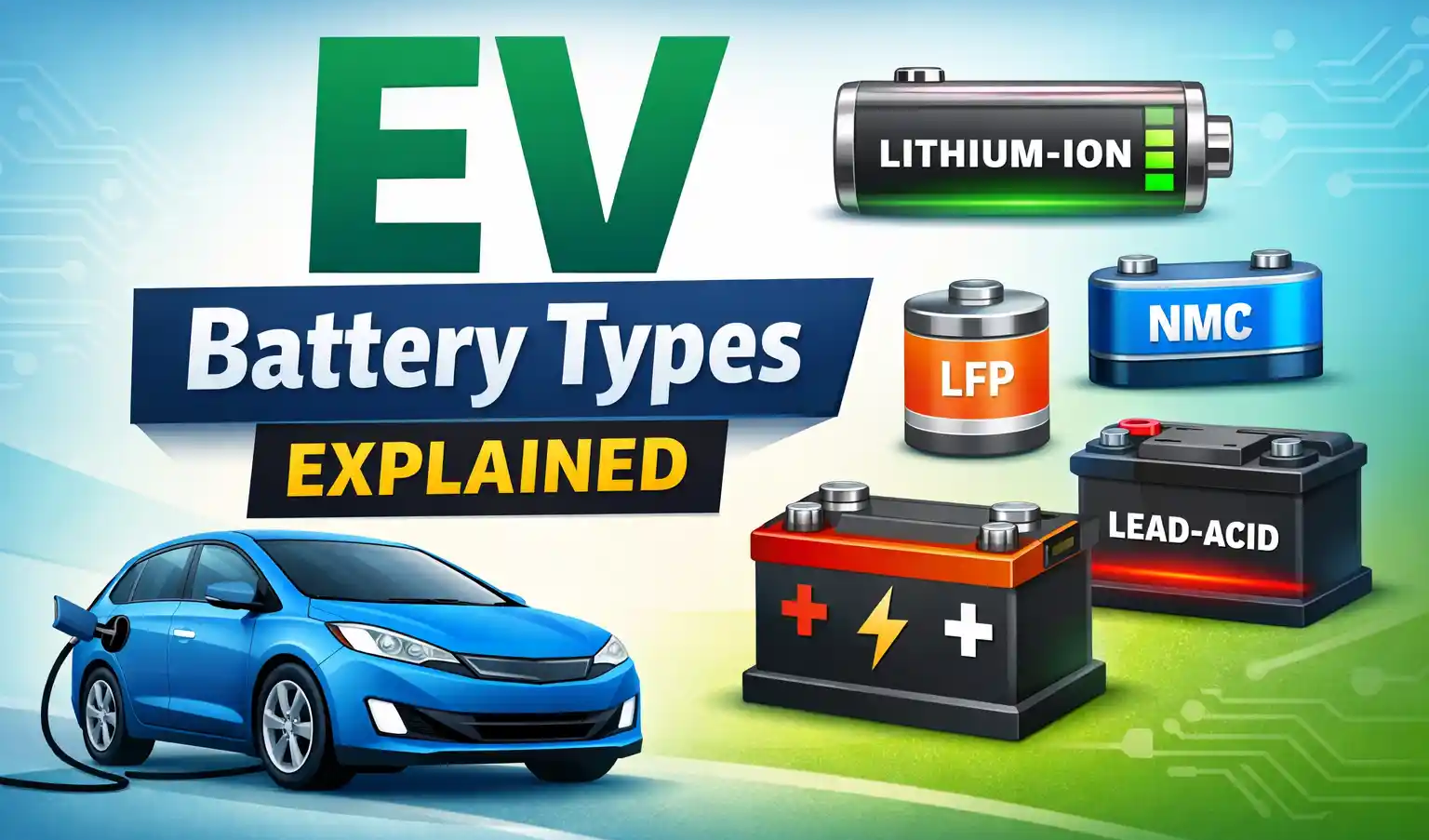
The global automobile market is undergoing a major transformation due to electric vehicles. Whether it is electric cars, scooters, buses, or commercial fleets, the real heart of every EV is its battery. Without an efficient battery system, performance, range, charging speed, and safety would all be compromised.
If you are planning to buy an EV or simply want to understand how electric vehicles work, knowing the different types of batteries used in EVs is extremely important. In this detailed guide, we will explore every major EV battery type, how they work, their advantages, disadvantages, lifespan, safety factors, and what the future holds.
Why EV Batteries Matter So Much
Unlike petrol or diesel vehicles that rely on combustion engines, electric vehicles depend entirely on battery packs to store and supply power to the electric motor. The battery determines:
- Driving range
- Acceleration performance
- Charging speed
- Vehicle weight
- Overall cost
- Long-term maintenance
That is why automakers invest heavily in battery research and development. A better battery means a better EV.
1. Lithium-Ion Battery (Li-ion) – The Most Common EV Battery
Lithium-ion batteries are currently the most widely used batteries in electric vehicles worldwide. Almost every modern EV uses some variation of lithium-ion chemistry.
How Lithium-Ion Batteries Work
Li-ion batteries store energy by moving lithium ions between the cathode and anode through an electrolyte. As the battery charges, lithium ions move across from the positive electrode toward the negative electrode. During discharge (when driving), the ions move back and generate electricity.
Advantages of Lithium-Ion Batteries
- High energy density (more range in less weight)
- Faster charging compared to older batteries
- Long lifespan (8–15 years depending on usage)
- Low self-discharge rate
- Compact design
Disadvantages
- Higher cost
- Thermal management required
- Performance can degrade in extreme temperatures
Popular EVs like Tata Nexon EV, MG ZS EV, Hyundai Kona Electric, Tesla models, Ola Electric scooters, and Ather 450X use lithium-ion batteries.
2. LFP Battery (Lithium Iron Phosphate)
LFP is a type of lithium-ion battery that is gaining popularity, especially in India and China. It replaces cobalt and nickel with iron phosphate, making it more stable and affordable.
Why LFP Batteries Are Becoming Popular
- Improved safety and thermal stability
- Lower risk of fire
- Longer cycle life
- Lower cost compared to NMC
Limitations of LFP
- Lower energy density
- Slightly heavier for same range
Many entry-level and mid-range EVs are now shifting to LFP because it offers a strong balance between cost, safety, and durability.
3. NMC Battery (Nickel Manganese Cobalt)
NMC batteries are another popular lithium-ion chemistry. They use a combination of nickel, manganese, and cobalt in the cathode.
Benefits of NMC Batteries
- High energy density
- Better driving range
- Strong acceleration performance
- Suitable for long-range EVs
Challenges
- More expensive
- Requires advanced cooling system
- Contains cobalt (cost and ethical concerns)
Premium EVs and long-range models often use NMC batteries.
4. NCA Battery (Nickel Cobalt Aluminum)
NCA batteries are used in some high-performance EVs. They provide even higher energy density compared to NMC.
Advantages
- Very high range capability
- Excellent power output
- Good lifespan
Disadvantages
- Expensive manufacturing
- Requires sophisticated thermal management
NCA batteries are generally found in premium and performance-focused EV models.
5. Lead-Acid Batteries (Older Technology)
Lead-acid batteries were commonly used in early electric scooters and e-rickshaws.
Pros
- Low cost
- Simple technology
Cons
- Heavy weight
- Short lifespan
- Low range
- Slow charging
Today, lead-acid batteries are rarely used in modern electric cars.
6. Solid-State Batteries – The Future of EVs
These next-generation solid-state batteries could shape the future of electric transportation. Instead of liquid electrolytes, they use solid electrolytes.
Why Solid-State Batteries Are Revolutionary
- Higher energy density
- Faster charging times
- Better safety
- Reduced fire risk
- Longer lifespan
Although still under development for large-scale production, many automakers are investing heavily in solid-state technology.
EV Battery Lifespan and Degradation
Most lithium-ion EV batteries last between 8 to 15 years. Battery degradation happens gradually due to charge cycles, temperature exposure, and fast charging habits.
Tips to Increase Battery Life
- Avoid charging to 100% regularly
- Do not frequently discharge below 10%
- Avoid extreme heat exposure
- Use slow charging when possible
Battery Management System (BMS)
Every EV battery pack includes a Battery Management System (BMS). It monitors temperature, voltage, charge level, and safety parameters. Without BMS, modern EVs would not function safely.
Comparison Table of EV Battery Types
| Battery Type |
Energy Density |
Safety |
Cost |
Usage |
| LFP |
Medium |
High |
Moderate |
Mass Market EVs |
| NMC |
High |
Medium |
High |
Long Range EVs |
| NCA |
Very High |
Medium |
Very High |
Performance EVs |
| Lead-Acid |
Low |
Low |
Low |
Older EVs |
| Solid-State |
Very High |
Very High |
Expensive |
Future EVs |
Future of EV Batteries
The EV battery industry is evolving rapidly. Researchers are working on sodium-ion batteries, graphene batteries, and ultra-fast charging technologies. Within the next decade, EV batteries may charge in under 10 minutes and offer 800+ km range.
Battery recycling and second-life applications will also play a crucial role in making EVs more sustainable and environmentally friendly.
Frequently Asked Questions (FAQs)
1. Which battery is best for electric cars?
Lithium-ion batteries are currently the best option due to their balance of range, safety, and lifespan.
2. How long does an EV battery last?
Most EV batteries last between 8 to 15 years depending on usage and charging habits.
3. Are EV batteries safe?
Yes, modern EV batteries include advanced safety systems and thermal management technology.
4. What is the future battery technology?
Solid-state batteries are expected to be the next major breakthrough in EV battery technology.
Conclusion
Electric vehicle batteries are the backbone of modern mobility. From lithium-ion to solid-state innovations, battery technology continues to evolve rapidly. Whether you prioritize safety, range, performance, or affordability, understanding battery types helps you make a smarter EV buying decision.
As technology advances, EV batteries will become safer, faster, cheaper, and more sustainable — making electric mobility the future of transportation worldwide.