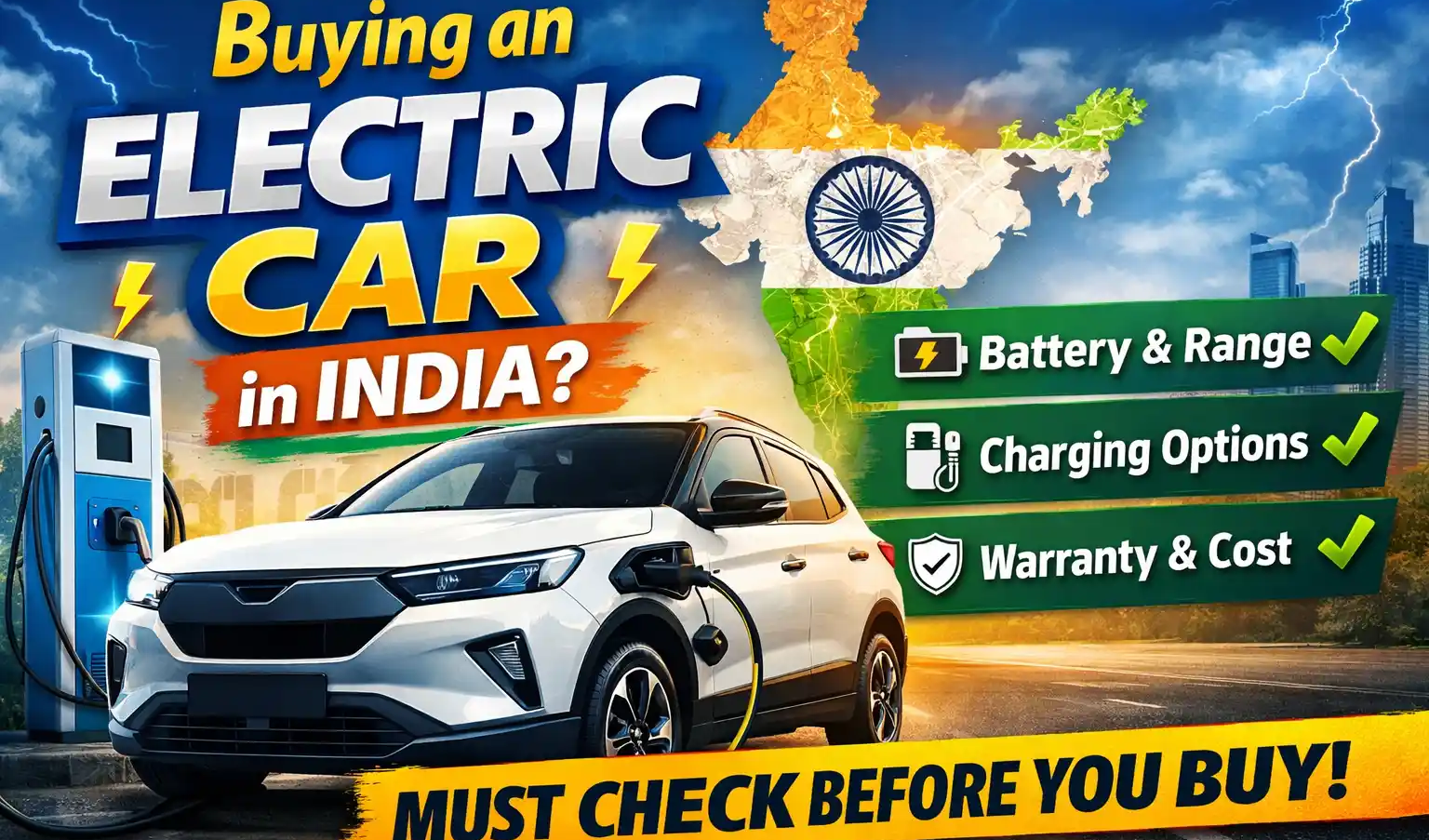
Electric vehicles are no longer just a trend — they are slowly becoming a practical alternative to petrol and diesel cars in India. However, purchasing an electric car requires a slightly different mindset. Unlike traditional vehicles, an EV revolves around battery technology, charging infrastructure, and long-term cost efficiency.
If you are planning to invest in an electric car, this detailed guide will help you make a smart and informed decision.
1. Understand Your Daily Driving Pattern First
Before looking at brands or features, calculate your real usage.
- How many kilometers do you drive daily?
- Do you mostly drive in city traffic?
- How often do you take highway trips?
If your daily driving is under 40–50 km, most entry-level EVs will easily meet your needs. However, if you regularly travel long distances, you should consider a higher battery capacity model.
2. Battery Capacity, Chemistry & Real-World Range
The battery is the most expensive and critical component of an EV.
- Battery size is measured in kWh.
- Bigger battery = longer driving range.
- Check real-world owner reviews instead of only claimed ARAI range.
Range can vary based on speed, AC usage, driving style and load. Highway driving generally reduces range compared to city driving.
Practical Tip: Choose a car that offers at least double your daily usage range for peace of mind.
3. Home Charging Convenience
Charging convenience is one of the biggest deciding factors.
- Do you have fixed parking?
- Can you install a dedicated wall charger?
- Does your society allow EV charger installation?
Most EV owners rely on overnight home charging. A standard AC charger may take 6–10 hours depending on battery size.
4. Fast Charging & Public Infrastructure
If you plan highway travel, fast charging capability is essential.
- Check DC fast charging compatibility.
- Understand 10–80% charging time.
- Verify charging stations on your common travel routes.
Charging infrastructure in India is expanding rapidly, but availability varies by city.
5. Battery Warranty & Replacement Cost
Battery replacement can be expensive, so warranty coverage matters.
- Look for at least 8 years warranty.
- Check kilometer limit coverage.
- Understand degradation policy.
Also ask about battery replacement cost after warranty expiry.
6. Total Cost of Ownership (Long-Term Savings)
EVs may seem expensive initially, but long-term savings are significant.
- Lower maintenance cost due to fewer moving parts.
- State tax benefits and subsidies.
- Reduced servicing expenses.
Over 5–7 years, EV ownership can become more economical compared to traditional vehicles.
7. Service Network & Software Support
Modern EVs are technology-driven vehicles.
- Check service center availability in your city.
- Understand software update policy.
- Look for connected features and remote monitoring.
8. Climate & Performance Impact
Extreme heat or cold can affect battery performance.
Vehicles with liquid-cooled battery systems generally perform better in Indian conditions.
9. Resale Value & Market Acceptance
EV resale market is still developing. Choosing a trusted and established brand can help maintain better resale value.
Future of Electric Vehicles in India
The future of electric mobility in India appears highly promising. Government initiatives are encouraging manufacturers and consumers to shift towards cleaner transportation.
Charging networks are expanding in metro cities and highways. Battery technology is improving, resulting in longer ranges and faster charging speeds.
With rising fuel prices and stricter emission regulations, the shift toward electric mobility is expected to accelerate significantly over the next decade.
Industry experts believe that by 2030, electric vehicles will hold a much larger share in India’s automotive market.
How Electric Vehicle Batteries Work – Complete Explanation
The battery is the core component of an electric vehicle. Unlike petrol cars that store fuel in a tank, EVs store electrical energy inside high-capacity lithium-ion battery packs.
1. What Type of Batteries Are Used in EVs?
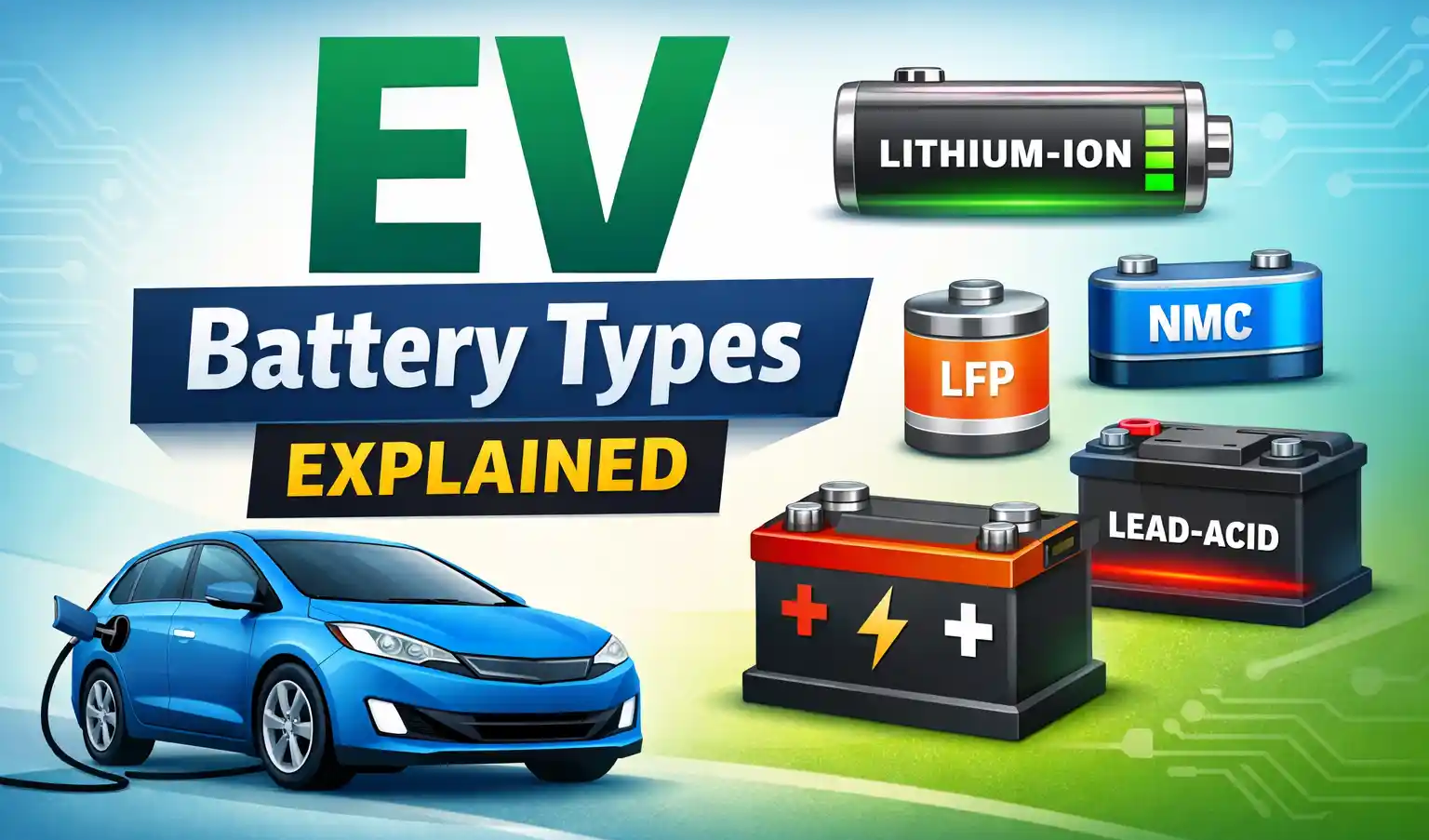
Most modern electric cars use Lithium-Ion batteries. These batteries are lightweight, energy-dense and capable of handling thousands of charge cycles.
Some common battery chemistries include:
- LFP (Lithium Iron Phosphate) – Safer and longer life cycle.
- NMC (Nickel Manganese Cobalt) – Higher energy density and better range.
2. What Does kWh Mean?
Battery capacity is measured in kilowatt-hours (kWh). A higher kWh rating means the battery can store more energy, which usually translates into longer driving range.
For example:
- 30 kWh battery = Suitable for city use
- 40–60 kWh battery = Balanced performance and range
- 70+ kWh battery = Long-distance capability
3. Battery Management System (BMS)
Every EV has a Battery Management System (BMS). It monitors temperature, voltage, and charging levels to ensure safety and efficiency. The BMS prevents overcharging, overheating and deep discharge.
4. Battery Cooling System
In Indian weather conditions, thermal management is very important. EV batteries may use:
- Air cooling system
- Liquid cooling system (more effective)
Liquid-cooled batteries generally offer better performance stability and longer lifespan.
5. Battery Degradation
Over time, battery capacity reduces slightly. This is called degradation. However, modern EV batteries are designed to retain most of their capacity even after several years of use.
Good charging habits such as avoiding frequent 0% to 100% cycles can help extend battery life.
How Electric Motors Work in EVs – Complete Explanation
An electric motor replaces the engine found in petrol or diesel vehicles. Instead of burning fuel, it converts electrical energy from the battery into mechanical motion.
1. Types of Motors Used in EVs
- PMSM (Permanent Magnet Synchronous Motor) – Common in modern EVs due to high efficiency and strong performance.
- Induction Motor – Durable and reliable, often used in performance-oriented EVs.
2. Instant Torque Advantage
One of the biggest advantages of electric motors is instant torque delivery. Unlike petrol engines that need RPM buildup, electric motors provide full torque immediately when you press the accelerator.
This results in:
- Quick acceleration
- Smooth driving experience
- Better city performance
3. Regenerative Braking System
Electric motors also help recharge the battery while slowing down. This process is called regenerative braking.
When you lift your foot off the accelerator, the motor acts like a generator and sends energy back to the battery.
4. Motor Efficiency
Electric motors are highly efficient compared to petrol engines.
- Petrol engine efficiency: ~30–35%
- Electric motor efficiency: ~85–95%
This high efficiency is one reason why EVs have lower running costs.
5. Maintenance Advantage
Electric motors have fewer moving parts compared to internal combustion engines. There are no pistons, crankshafts or complex gear systems. This reduces wear and tear and lowers maintenance requirements.
Final Thoughts
An electric car can be a smart investment if it matches your driving needs and charging convenience. Evaluate range, charging access, long-term cost, and warranty carefully before making a purchase decision.
Frequently Asked Questions (FAQs)
Is an electric car suitable for daily city driving?
Yes, electric cars are ideal for daily commuting due to low running costs and smooth driving.
How long does an EV battery last?
Most EV batteries are engineered to last around 8–10 years.
Is EV maintenance cheaper than petrol cars?
Generally yes, because EVs have fewer mechanical components.
What is the future of electric vehicles in India?
The EV market in India is expected to grow rapidly due to infrastructure development and policy support.