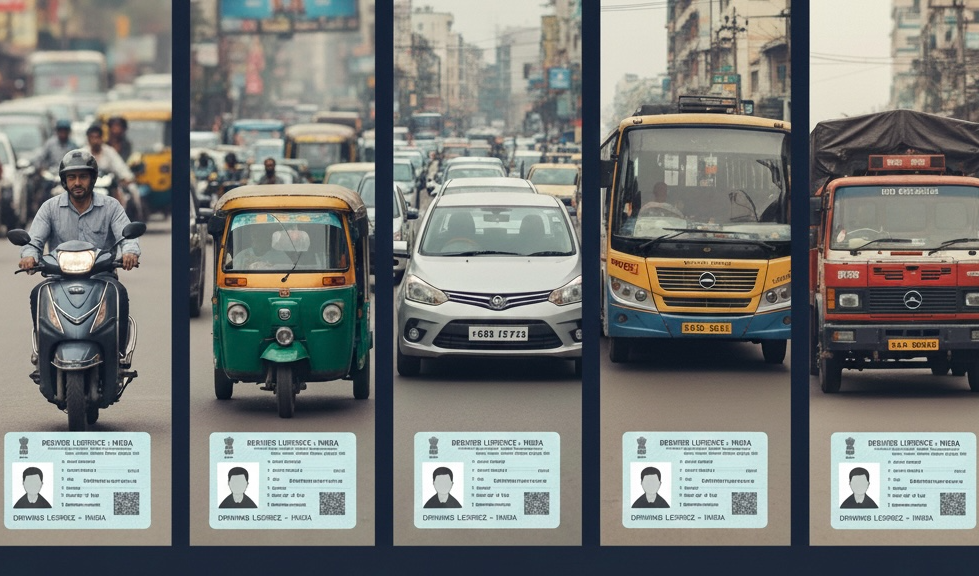
A Complete & Practical Guide for Two-Wheelers, Three-Wheelers, Cars, Trucks, Buses, and Commercial Vehicles
Driving on Indian roads is a daily necessity for millions of people. Some ride a two-wheeler to the office, some drive a car with family, while others earn their livelihood by driving autos, taxis, trucks, or buses. But no matter what vehicle you drive, Indian traffic laws clearly define what you need to drive legally.
Many people think that just knowing how to drive is enough. In reality, the law looks at licence category, vehicle type, purpose of use, and safety compliance. This is where most people make mistakes and end up paying heavy challans.
In this detailed guide, we will clearly explain what is required to drive different types of vehicles in India, including private and commercial vehicles, in simple and practical language.
Basic Legal Requirements for Driving Any Vehicle in India
Before we talk about specific vehicle types, let’s understand the common rules that apply to everyone.
No matter whether you drive a bike, car, truck, or bus, you must have:
A valid Driving Licence (DL) for the correct vehicle category
Registration Certificate (RC) of the vehicle
Motor Insurance (minimum Third Party insurance is compulsory)
PUC Certificate (Pollution Under Control)
Compliance with traffic rules and safety laws
Important thing to remember:
Digital documents stored in DigiLocker or mParivahan are legally valid and accepted by traffic police across India.
Requirements to Drive a Two-Wheeler in India (Bike / Scooter)
Two-wheelers are the most popular vehicles in India, especially for daily commuting. However, traffic rules for two-wheelers are strictly enforced.
Driving Licence Required
You must have one of the following licences:
MCWOG – Motor Cycle Without Gear (for scooters like Activa)
MCWG – Motor Cycle With Gear (for bikes)
Driving a bike with only a car licence is illegal.
Other Mandatory Requirements
ISI-certified helmet (mandatory for rider; pillion rules depend on state)
Valid RC, insurance, and PUC
Functional headlights, indicators, mirrors, and horn
Age Rules
Minimum age: 18 years
16–18 years: Only gearless two-wheelers up to 50cc, with parental consent and special licence
Two-wheeler violations like riding without helmet or licence can lead to ₹1,000–₹5,000 challan and licence suspension.
Requirements to Drive a Three-Wheeler in India (Auto Rickshaw, E-Rickshaw)
Three-wheelers are mostly used for commercial transport, which means additional legal responsibilities.
Driving Licence
Transport Vehicle Licence (TRV) or specific Three-Wheeler endorsement
A normal private licence is not enough.
Additional Requirements
Commercial permit issued by RTO
Fitness Certificate (renewed periodically)
Commercial vehicle insurance
Driver badge (required in many states)
E-Rickshaws
Many people think e-rickshaws don’t need documents. This is wrong.
Licence, registration, and insurance are mandatory
Vehicle must comply with government-approved specifications
Driving a three-wheeler without commercial permission can result in heavy fines and vehicle seizure.
Requirements to Drive a Four-Wheeler (Private Car)
Driving a personal car is simpler compared to commercial vehicles, but rules are still strict.
Driving Licence
LMV (Light Motor Vehicle) licence
This licence allows you to drive:
Cars
SUVs
Jeeps
Private vans (within weight limits)
Mandatory Rules
Seat belt compulsory for driver and front passenger
Valid RC, insurance, and PUC
Vehicle must have proper lights, mirrors, horn, and number plate
Commercial Cars (Taxi, Cab, Ride-Sharing)
If the car is used for earning money:
Commercial / Transport Driving Licence required
Yellow number plate
Commercial permit and fitness certificate
Using a private car or licence for commercial purposes is illegal.
Requirements to Drive Trucks in India (Goods Vehicles)
Truck driving comes under commercial and heavy vehicle category and involves strict rules.
Driving Licence
HMV (Heavy Motor Vehicle) or Transport Licence
In most cases:
Driver must already have LMV experience
Minimum age is usually 20–22 years (varies by state)
Additional Legal Requirements
Goods carriage permit (State or National)
Fitness Certificate (renewed annually or bi-annually)
Commercial insurance
Compliance with load limits
Overloading is one of the biggest violations in truck driving and attracts very high penalties.
Requirements to Drive Buses in India (Private & Government)
Bus drivers carry many passengers, so safety and legal checks are very strict.
Driving Licence
HMV / Bus endorsement licence
Mandatory Documents
Public Service Vehicle (PSV) badge
Route permit
Fitness certificate
Commercial insurance
Special Conditions
Regular medical fitness tests
Strict monitoring of rash driving
Heavy punishment for negligence
Bus drivers are expected to have good experience and clean driving records.
Requirements for Commercial Vehicles in General
Commercial vehicles include:
Auto rickshaws
Taxis
Delivery vans
Trucks
Buses
Common Legal Requirements
Transport / Commercial Driving Licence
Vehicle permit
Fitness Certificate
Commercial insurance
Proper number plate and markings
Driving a commercial vehicle without fulfilling these conditions can lead to:
High challans
Licence cancellation
Vehicle impoundment
Legal action
Learner Licence vs Permanent Licence
-
Learner Licence (LL):
-
Valid for learning
-
“L” sign mandatory
-
Supervision required
-
Permanent Licence:
Driving without either is a serious offence.
Importance of Matching Licence with Vehicle Type
One of the most common mistakes in India is driving a vehicle without the correct licence category.
Examples:
Driving a taxi with a private licence
Riding a bike with only a car licence
Driving a truck with LMV licence
These mistakes can lead to heavy fines and licence cancellation, even if all documents are available.
Final Conclusion
Driving legally in India is not complicated, but it requires awareness and responsibility. The law does not care whether the mistake was intentional or not. If your licence or vehicle category does not match, you will be penalized.
Whether you are:
Riding a two-wheeler for daily commute
Driving a car for family use
Running an auto or taxi
Driving a truck or bus for livelihood
👉 Always ensure your licence, vehicle type, and purpose of use are perfectly aligned.
Following traffic rules not only saves you from challans but also makes roads safer for everyone.