For years, European cars in India have carried a premium tag that placed them far beyond the reach of most buyers. High import duties, complex regulations, and limited localization have made brands like BMW, Mercedes-Benz, Audi, Volkswagen, Volvo, and Skoda expensive compared to their global pricing. Now, a major policy discussion by the Indian government could change this reality forever.
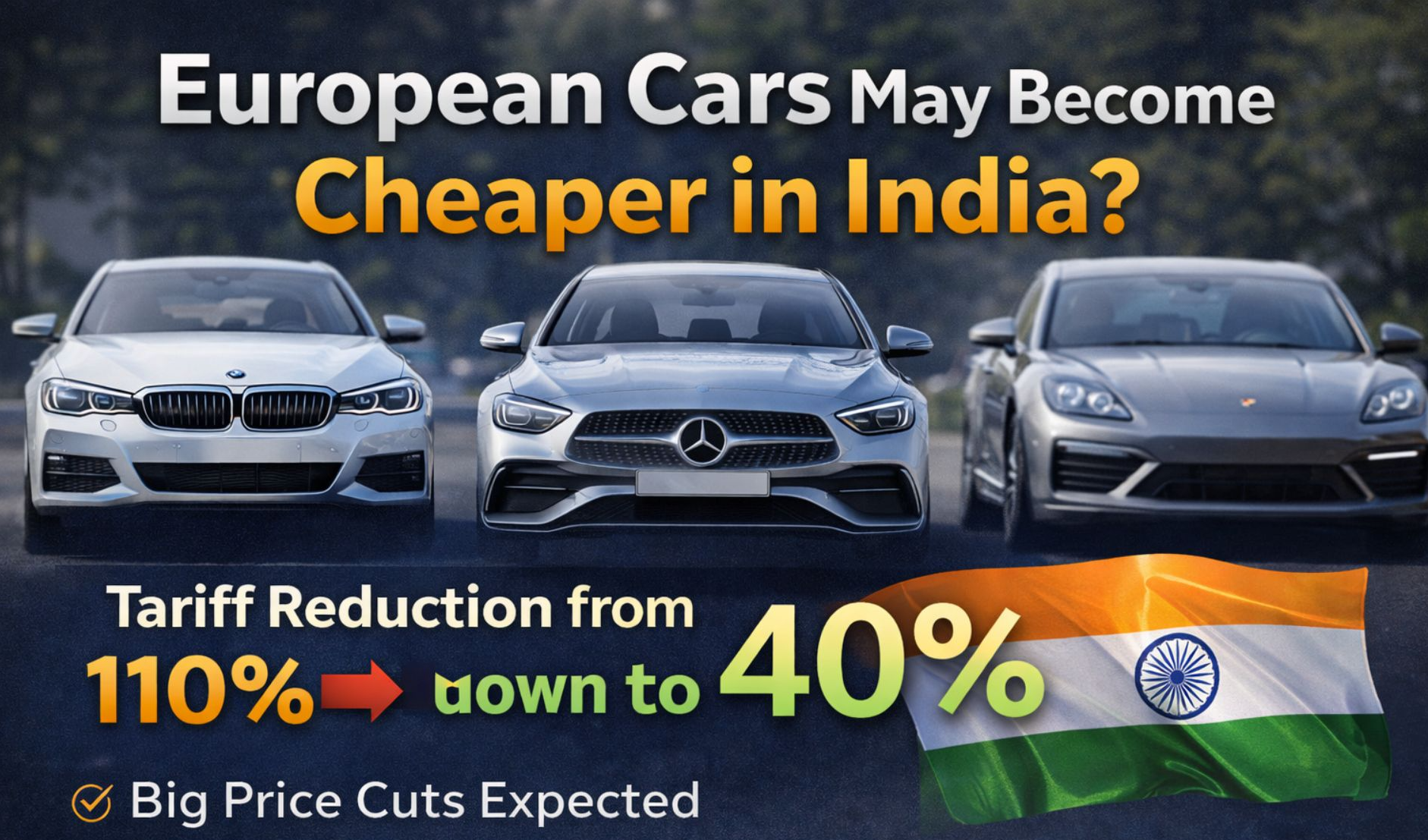
Reports suggest that India is considering reducing import tariffs on European cars from nearly 110% to around 40%. If implemented, this move could significantly lower prices, reshape buyer behavior, and disrupt the Indian automotive market in a big way.
In this blog, we will break down what this tariff cut means, which European brands stand to benefit, how much prices could realistically drop, and whether this decision is actually good for Indian car buyers in the long run.
Understanding the Current Import Duty Structure in India
At present, fully imported cars (CBUs – Completely Built Units) attract some of the highest import duties in India. Based on the engine capacity and vehicle segment, the overall tax load can go as high as 100–110%. This includes basic customs duty, cess, GST, and additional surcharges.
This is the primary reason why a car that costs ₹35 lakh abroad ends up costing ₹70–80 lakh in India. European manufacturers either pass this cost to buyers or avoid launching many global models altogether.
The proposed reduction to 40% could dramatically reduce this gap and allow more global models to enter India.
Why Is the Indian Government Considering a Tariff Reduction?
The move is being discussed as part of broader trade negotiations with the European Union. India wants better access to European markets for its goods, while European nations want easier entry for their automobiles.
From the government’s perspective, lower tariffs could:
- Increase competition in the premium car segment
- Give Indian consumers more choices
- Encourage global manufacturers to bring advanced technology
- Improve safety and emission standards through better products
However, it also raises concerns about the impact on local manufacturing and domestic brands.
Major European Car Brands in India
Let’s look at the key European brands that could benefit directly from this tariff cut.
1. Mercedes-Benz
Mercedes-Benz already assembles many cars locally, but premium imports like the G-Class, Maybach, and AMG models are heavily taxed. A tariff reduction could slash prices of flagship models by ₹20–40 lakh.
2. BMW
BMW imports models like the i7, XM, and M series. These performance and luxury cars could see price reductions of up to 30%, making them far more competitive.
3. Audi
Audi relies heavily on imported models. Lower tariffs could help Audi revive its lineup in India and bring global models faster.
4. Volkswagen
Volkswagen’s global performance cars like the Golf GTI, Tiguan R, and Arteon could become more accessible.
5. Skoda
Skoda could introduce international-spec sedans and SUVs at more realistic prices.
6. Volvo
Volvo imports most of its cars into India. A tariff cut could finally allow Volvo to price its cars competitively against German rivals.
7. Porsche
Porsche is one of the biggest potential winners. Sports cars like the 911, Taycan, and Cayenne could see massive price drops.
Estimated Price Impact: Before vs After Tariff Cut
Below is an approximate estimate of how prices could change if import duties are reduced from 110% to 40%.
| Car Model (European, CBU) |
Current Approx Price (₹) |
Expected After Duty Cut (₹) |
| Mercedes-Benz G-Class |
₹2.90–4.00 Cr |
₹2.00–2.70 Cr |
| Land Rover Defender 130 |
₹1.70–2.00 Cr |
~₹1.15 Cr |
| BMW M4 Competition |
~₹1.55 Cr |
~₹1.08 Cr |
| Audi RS Q8 |
~₹2.30 Cr |
~₹1.60 Cr |
| Porsche 911 Carrera |
~₹2.10 Cr |
~₹1.47 Cr |
| Lamborghini Urus |
~₹4.40 Cr |
~₹3.08 Cr |
| Bentley Bentayga |
~₹5.00 Cr |
~₹3.50 Cr |
| Ferrari Roma |
~₹3.80 Cr |
~₹2.66 Cr |
| Ferrari Purosangue (V12 SUV) |
~₹5.50 Cr |
~₹3.80 Cr |
| Rolls-Royce Ghost |
₹6.95–7.95 Cr |
~₹4.80–5.50 Cr |
| Range Rover (Top Trims) |
₹2.60–4.17 Cr |
~₹1.80–2.90 Cr |
These are not official prices, but realistic projections based on tax reduction math.
How This Could Change the Indian Car Market
A major tariff reduction will not just affect luxury buyers. It will reshape the entire ecosystem.
More Choices for Buyers
Indian consumers will finally have access to global models that were never launched due to high taxes.
Pressure on Indian Luxury Brands
Locally assembled luxury cars may face pricing pressure, forcing manufacturers to add more features or cut margins.
Technology Transfer
Advanced safety systems, hybrid engines, and performance tech could enter India faster.
Impact on Electric and Hybrid European Cars
This policy could be a game-changer for European EVs. Brands like BMW, Audi, Mercedes, and Volvo have strong electric portfolios.
Lower import duties could:
- Reduce EV prices by ₹15–25 lakh
- Improve EV adoption in premium segments
- Introduce global EV platforms in India
This aligns well with India’s long-term electric mobility goals.
Is This Bad for Indian Manufacturers?
This is where the debate gets serious. Indian automakers fear that cheaper imports could hurt local production.
However, premium European cars operate in a different segment. Mass-market buyers are unlikely to switch from affordable Indian cars to imported European luxury vehicles.
In my opinion, competition at the top end actually pushes the entire industry forward.
My Personal Opinion on This Policy Change
As an automobile observer, I believe this tariff reduction is overdue. Indian buyers have been paying inflated prices for years without any real justification.
Lower duties won’t kill Indian manufacturing. Instead, it will:
- Force brands to innovate
- Improve product quality
- Give buyers value for money
The key is balance. Imports should be encouraged, but local manufacturing must also be protected through smart policies.
Will This Policy Actually Be Implemented?
While discussions are ongoing, implementation will depend on trade agreements, political consensus, and industry feedback.
If approved, this could be one of the most impactful automotive policy changes in recent years.
Final Verdict
If India reduces import tariffs on European cars from 110% to 40%, it will be a historic shift. Luxury cars will become more attainable, EV adoption will rise, and consumers will finally get fair pricing.
For car enthusiasts and premium buyers, this could be the best news in years.
Sources
- Indian automotive policy discussions
- European trade negotiation reports
- Industry pricing analysis
- Automobile market trends in India