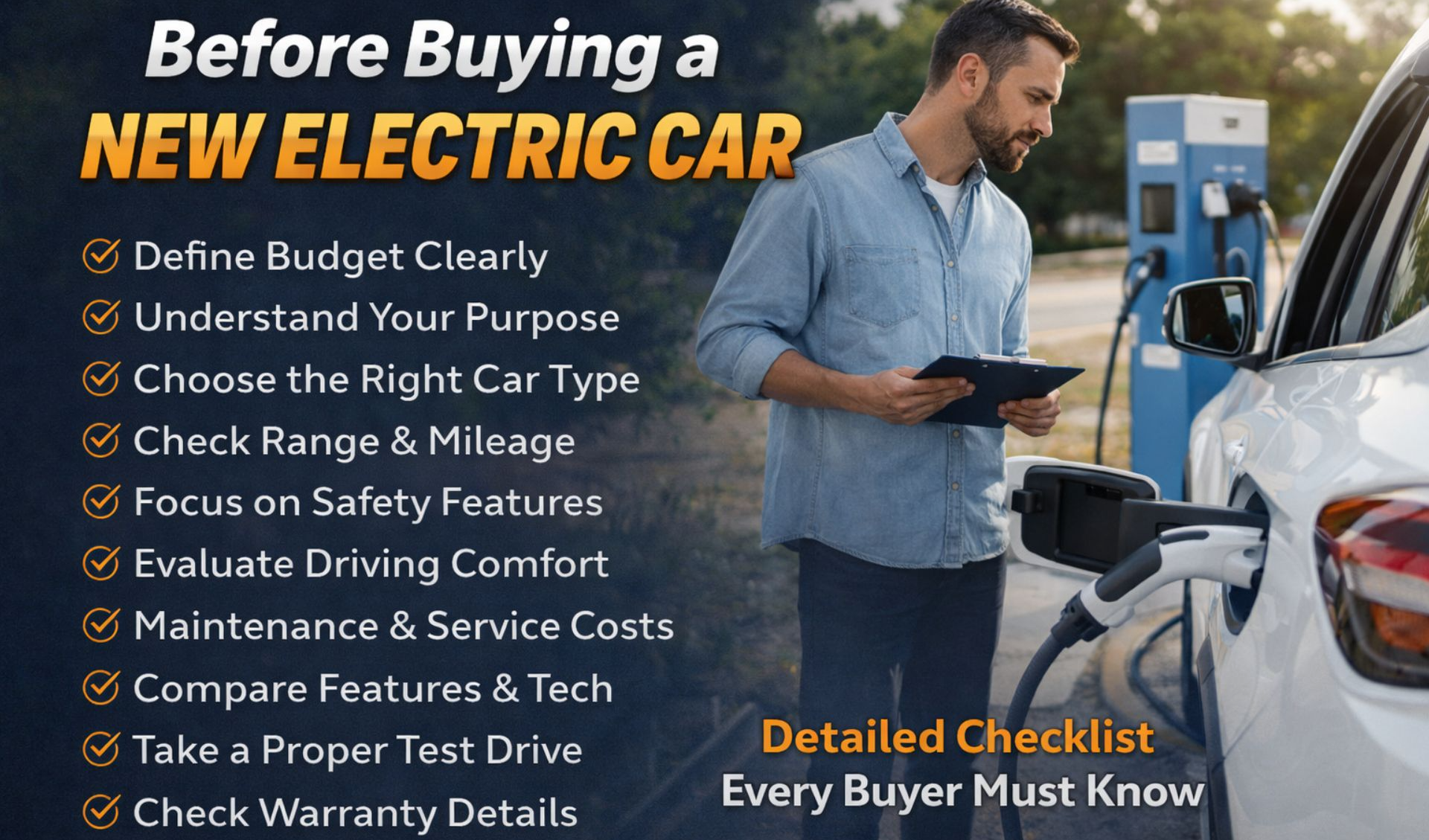
Things to Consider Before Buying a New Electric Car
Electric cars are no longer a future concept—they are quickly becoming a practical and sensible choice for Indian buyers. Rising fuel prices, government incentives, and improved charging infrastructure have pushed EVs into the mainstream. However, buying an electric car is very different from buying a petrol or diesel vehicle.
If you are planning to purchase a new electric car, making an informed decision is extremely important. This guide walks you through all the essential factors you should consider before investing in an EV, ensuring that your purchase is future-proof, cost-effective, and suitable for your lifestyle.
1. Define Your Budget Clearly
Before exploring electric car options, clearly define your budget. EVs generally have a higher upfront cost compared to petrol cars, mainly due to battery technology. However, this does not mean they are expensive in the long run.
Consider not just the ex-showroom price, but also on-road cost, insurance, charging setup cost (if installing at home), and optional accessories. A slightly higher initial investment can often result in lower running and maintenance costs over the years.
My opinion: Many buyers focus only on purchase price and ignore long-term savings. EVs make more sense when viewed as a 5–7 year ownership decision.
2. Understand Your Purpose of Buying a Car
Ask yourself a simple question: why do you need an electric car?
If your daily usage involves city commuting, office travel, or short trips, an EV is an excellent choice. However, if you frequently travel long distances or drive in areas with limited charging infrastructure, you must evaluate range and charging options more carefully.
Your usage pattern plays a key role in deciding whether an electric car is practical for you.
3. Choose the Right Car Type
Electric cars are available in various body styles including hatchbacks, sedans, compact SUVs, and mid-size SUVs. The right choice depends on your family size, road conditions, and driving needs.
City users often prefer compact EVs for easy maneuverability, while highway users may opt for SUVs that offer better comfort and ground clearance.
Choosing the right car type ensures better comfort and usability over the years.
4. Check Fuel Type and Mileage (Range)
In electric cars, mileage is referred to as driving range. This indicates how many kilometers the car can travel on a single charge.
Always check the real-world range rather than just the claimed figures. Factors such as driving style, traffic, air conditioning usage, and terrain can affect actual range.
A practical EV should comfortably deliver enough range to cover your daily usage without frequent charging anxiety.
5. Focus on Safety Features
Safety should never be compromised, regardless of the vehicle type. Look for essential safety features such as multiple airbags, ABS with EBD, electronic stability control, traction control, and strong body structure.
Many modern EVs also offer advanced safety technologies, which enhance confidence while driving.
My opinion: Battery safety and crash protection are critical in EVs. Always choose a model with proven safety standards.
6. Evaluate Engine Performance and Driving Comfort
Electric cars are known for instant torque and smooth acceleration. This makes them extremely comfortable for city driving.
Check how the car responds in traffic, during overtakes, and on inclines. Also evaluate suspension comfort, cabin noise levels, and steering feedback.
A comfortable EV makes daily driving stress-free and enjoyable.
7. Maintenance Cost and Service Network
One of the key benefits of electric cars is that they require minimal maintenance. With fewer moving parts, EVs require less servicing compared to internal combustion vehicles.
However, you should still check the brand’s service network, availability of trained technicians, and battery replacement policies.
8. Compare Features and Technology
Modern electric cars are packed with technology. From large touchscreens and connected car features to regenerative braking and driving modes, EVs offer a futuristic driving experience.
Compare features across models and ensure you are not overpaying for features you may never use.
Technology should enhance convenience, not complicate ownership.
9. Take a Proper Test Drive
A test drive is crucial before buying any car, especially an electric one. During the test drive, focus on throttle response, braking feel, ride quality, and ease of driving.
Try driving in real traffic conditions if possible to understand how the EV behaves in daily use.
This step often clears doubts that specifications alone cannot.
10. Check Warranty and After-Sales Support
Battery warranty is one of the most important aspects of an electric car. Most manufacturers offer long-term battery warranties, which adds confidence.
Also check warranty coverage for other components and roadside assistance support.
A strong warranty indicates manufacturer confidence in their product.
11. Insurance and Ownership Cost
Insurance premiums for EVs may differ slightly from petrol cars. Always compare insurance plans and coverage options.
Consider total ownership cost including charging cost, maintenance, insurance, and depreciation.
In most cases, EVs turn out to be more economical in the long run.
12. Resale Value and Brand Reliability
Resale value is an important consideration for Indian buyers. While the EV resale market is still developing, established brands tend to offer better resale prospects.
Brand reliability, service quality, and battery health records will influence future resale value.
Choosing a trusted brand reduces long-term risk.
13. Read Reviews and User Feedback
Real user reviews provide valuable insights that brochures and advertisements cannot. Look for feedback related to range consistency, charging experience, service quality, and reliability.
User experiences often highlight real-world strengths and weaknesses.
14. Avoid Unnecessary Accessories at the Dealership
Dealerships often push additional accessories that significantly increase the final cost. Evaluate which accessories are truly necessary and which can be avoided.
Many accessories can be installed later at a lower cost from outside sources.
Smart buying decisions help control expenses.
15. Final Documentation and Delivery Check
Before taking delivery, carefully check all documents including invoice, warranty papers, insurance details, and registration information.
Inspect the vehicle for any physical damage, verify charging equipment, and ensure software updates are completed.
A proper delivery check ensures a smooth ownership start.
Final Thoughts
Buying an electric car is not just about switching fuel type—it is about adopting a new driving ecosystem. With proper planning, understanding, and research, an EV can be one of the most rewarding automotive purchases.
My final opinion: If your usage aligns with electric mobility and you plan ownership for several years, an electric car is a smart, future-ready decision that offers both savings and satisfaction.