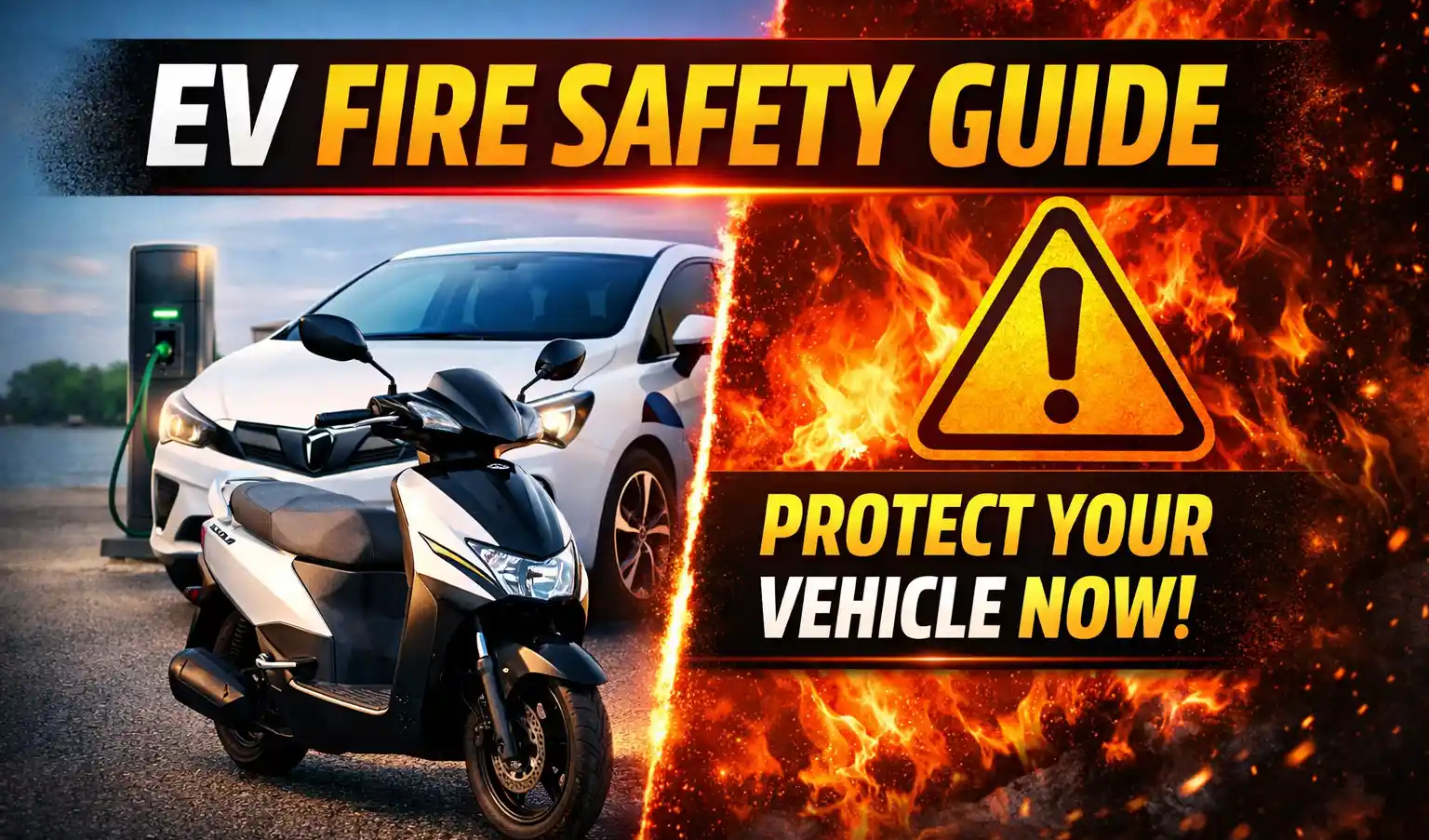
The shift towards Electric Vehicles (EVs) in India is no longer a trend — it’s a revolution. From daily commuters using electric scooters to families investing in electric cars, the country is rapidly embracing clean mobility.
However, along with innovation comes responsibility. Recently, a concerning fire incident in Indore. brought EV safety into the spotlight. While such incidents are rare, they highlight the importance of awareness, correct usage, and preventive care.
This detailed guide will walk you through everything you need to know about EV fire safety — from understanding the root causes to practical steps that can keep you and your vehicle safe.
The Indore EV Fire Incident – A Wake-Up Call
The recent EV fire case in Indore shocked many users. A parked electric vehicle reportedly caught fire, raising concerns about battery safety and charging practices. While official investigations may point to specific technical reasons, such incidents usually involve:
- Battery overheating due to thermal imbalance
- Faulty or non-certified charging equipment
- Improper storage or extreme heat exposure
- Possible manufacturing or maintenance issues
This incident is not a reason to fear EVs — instead, it’s a reminder that technology must be handled responsibly.
🔬 Understanding EV Batteries: Where the Real Risk Lies
Every electric vehicle runs on a lithium-ion battery pack, which acts as the heart of the entire system. These batteries are known for delivering high energy efficiency, quick charging capability, and long-term usability — which is why they are used not only in EVs but also in devices like smartphones and laptops.
However, despite their advantages, lithium-ion batteries require careful handling because they are sensitive to certain conditions that can impact their safety.
How Lithium-Ion Batteries Function
Lithium-ion batteries work by transferring lithium ions between two electrodes — the positive (cathode) and negative (anode) — during charging and discharging cycles. This movement generates and stores energy efficiently.
While this technology is highly advanced, it can become unstable if exposed to unfavorable conditions such as:
- Excessive heat: High temperatures can disturb the internal balance of the battery
- Overcharging: Charging beyond recommended limits can stress battery cells
- Physical impact: Accidents or drops may damage internal components
- Electrical faults: Internal or external short circuits can trigger failures
What is Thermal Runaway?
Thermal runaway is one of the most critical risks associated with lithium-ion batteries. It is a condition where the battery enters an uncontrollable heating cycle.
- The battery temperature begins to rise rapidly
- This heat triggers further internal reactions
- A chain reaction is created, increasing heat continuously
- In extreme cases, it can result in fire or even an explosion
To minimize such risks, modern electric vehicles are equipped with a Battery Management System (BMS). This system constantly monitors temperature, voltage, and charging patterns to keep the battery operating within safe limits.
In simple terms, while EV batteries are highly reliable, their safety depends on proper management, usage, and built-in protection systems.
Common Causes of EV Fires
1. Overcharging the Battery
Leaving your EV plugged in for too long can stress the battery, especially if safety systems fail or low-quality chargers are used.
2. Using Duplicate Chargers
Local or uncertified chargers are one of the biggest risks. They can cause voltage fluctuations and overheating.
3. High Ambient Temperature
India’s climate can be harsh. Parking your EV under direct sunlight for long hours increases battery temperature significantly.
4. Physical Damage
Even a minor accident can damage the battery pack internally, leading to delayed fire risk.
5. Water Damage
Flooded roads or deep water exposure can compromise battery integrity, even if the vehicle appears fine initially.
6. Poor Quality EV Brands
Some low-cost EV manufacturers cut corners in battery quality and safety systems, increasing risk.
Essential EV Safety Tips to Prevent Fire Incidents
1. Always Use Manufacturer-Approved Charger
Never compromise here. Certified chargers are designed specifically for your vehicle’s battery.
2. Avoid Overnight Charging (Regularly)
Occasional overnight charging is fine, but making it a habit can degrade battery health over time.
3. Install a Dedicated Charging Point
Avoid extension cords or unstable connections. Use proper wiring with earthing.
4. Charge in Ventilated Areas
Heat buildup during charging is normal. Ventilation helps prevent overheating.
5. Keep Away from Flammable Materials
Never charge near petrol cans, wooden furniture, or cloth materials.
6. Monitor Battery Temperature
If your EV app shows battery temperature, keep an eye on it during charging.
7. Avoid Fast Charging Frequently
Fast charging generates more heat. Use it only when necessary.
8. Don’t Charge Immediately After a Ride
Let the battery cool down before plugging in.
9. Regular Servicing is Must
Authorized service checks can detect early issues.
10. Avoid Local Modifications
Never alter wiring or battery systems.
11. Update Software Regularly
Modern EVs rely on software for safety. Keep it updated.
12. Park in Shade
Reduce heat exposure by avoiding direct sunlight parking.
13. Be Careful After Accidents
Get your battery inspected even if damage looks minor.
14. Avoid Water Logging Areas
Don’t take your EV through deep flooded roads.
15. Choose Trusted Brands Only
Safety starts with the right product choice.
Electric Cars vs Electric Scooters – Safety Comparison
Not all EVs are equally safe. Let’s understand:
Electric Cars
- Advanced Battery Management Systems
- Better cooling systems
- Stronger build quality
Electric Scooters
- Compact battery packs
- Higher exposure to heat
- Often budget-focused manufacturing
This doesn’t mean scooters are unsafe — but they require extra attention.
What To Do If Your EV Catches Fire?
In case of an emergency:
- Move away immediately
- Do not panic
- Avoid using water directly
- Use appropriate fire extinguisher if trained
- Call emergency services
EV fires are intense and difficult to control — personal safety is the priority.
Charging at Home vs Public Charging – Which is Safer?
Home Charging
- Safer if wiring is proper
- Better control
- Lower risk
Public Charging
- Fast but higher stress on battery
- Depends on station quality
- Useful for long trips
Best practice: Use home charging for daily needs.
Future of EV Safety in India
The Indian EV ecosystem is evolving rapidly. Safety improvements include:
- Advanced battery cooling technologies
- AI-based battery monitoring
- Stricter government regulations
- Improved charging infrastructure
Manufacturers are investing heavily to ensure EVs become even safer than traditional vehicles.
Final Thoughts
Electric vehicles are not dangerous — lack of awareness is.
The Indore incident reminds us that even advanced technology needs responsible handling. By following proper safety practices, you can enjoy EV ownership without fear.
EVs are the future of India — clean, efficient, and smart. Just make sure your approach is equally smart.
Frequently Asked Questions (FAQs)
Q1. Are EV fires common in India?
No, they are rare compared to petrol vehicle fires.
Q2. Can EV batteries explode?
In extreme cases involving thermal runaway, yes — but modern safety systems reduce this risk significantly.
Q3. Is fast charging dangerous?
Not dangerous, but frequent use can increase battery stress.
Q4. Should I worry about EV safety?
No — just follow proper guidelines and stay informed.
Q5. Which EV is safest?
Vehicles from trusted brands with certified batteries and strong safety features.