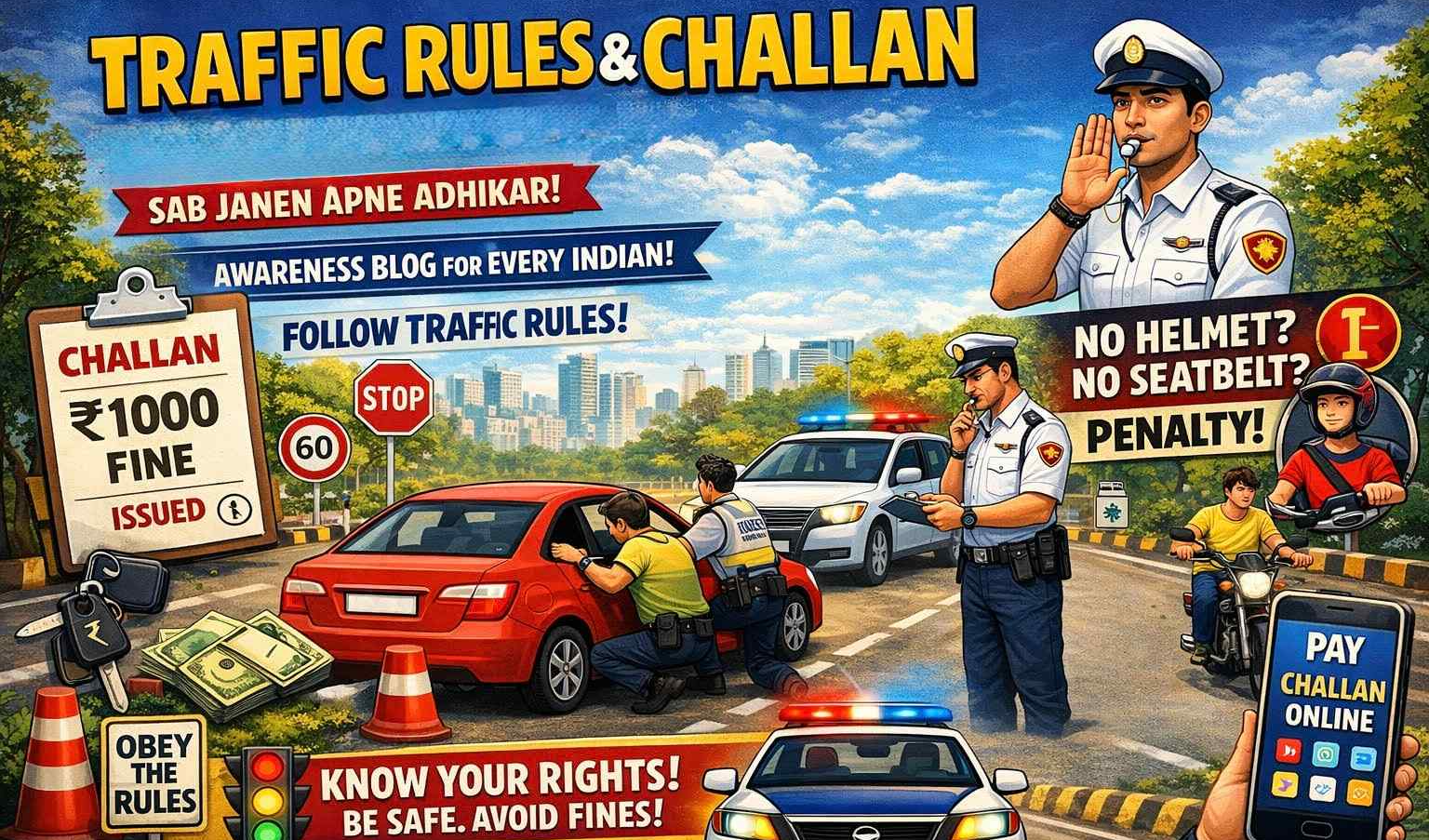
Traffic rules exist to maintain order, reduce accidents, and protect lives. However, many people either ignore these rules or are unaware of the penalties linked to traffic violations. This lack of awareness often leads to frequent traffic challans, unnecessary fines, and even legal trouble.
With the rise of digital surveillance, traffic cameras, and e-challan systems, avoiding penalties by ignorance is no longer possible. Every road user—whether a car driver, bike rider, or occasional commuter—must understand traffic rules and challan regulations clearly.
This blog explains the most important traffic rules and challan-related topics in India in a simple, practical, and easy-to-understand manner so that you can stay informed, safe, and compliant.
Why Understanding Traffic Rules and Challans Is Important
Traffic challans are not issued only to collect fines. They are meant to:
Discourage unsafe driving behavior
Promote road discipline
Reduce road accidents
Protect pedestrians and other drivers
Ignoring traffic rules can lead to financial loss, license suspension, or even imprisonment in serious cases. Awareness helps you drive confidently and responsibly.
How to Check Traffic Challan Online
Checking traffic challans online is now simple and transparent due to the digital system.
Methods to Check Online Challan
You can check your traffic challan using:
Vehicle registration number
Driving license number
Most challans are generated electronically through traffic cameras and handheld devices used by traffic police.
Steps to Check Traffic Challan Online
Visit the official traffic challan portal
Enter your vehicle number or driving license number
Submit the details
View pending or cleared challans
Benefits of Online Challan Checking
Saves time and effort
Avoids visiting traffic police offices
Prevents late payment penalties
Helps maintain a record of violations
Regularly checking your challan status is a smart habit, especially if you drive frequently in urban areas.
Fine for Not Wearing a Helmet
Wearing a helmet is mandatory for two-wheeler riders and pillion passengers.
Helmet Rule in India
Both rider and pillion must wear a helmet
Helmet should be standard and properly secured
Helmet Fine Amount
If caught without wearing a helmet:
Fine can be up to ₹1,000
In some cases, driving license suspension may apply
Why Helmet Rules Are Strict
Prevents severe head injuries
Reduces fatal accident risk
Ensures safety of both rider and passenger
Wearing a helmet is not just about avoiding a challan—it is about protecting your life.
Over Speeding Challan Rules
Driving at excessive speeds remains one of the primary reasons for road accidents across India.
What Is Considered Over Speeding
Driving beyond the legally permitted speed limit for a particular road or area.
Speed limits depend on:
Road type
Urban or highway zones
Vehicle category
Over Speeding Fine
Light motor vehicles: ₹1,000 to ₹2,000
Repeat offenses may lead to higher penalties or license action
Speed cameras and radar systems are widely used, making over speeding easy to detect.
Why Over Speeding Is Dangerous
Reduces reaction time
Increases braking distance
Causes severe accidents
Reaching a destination a few minutes earlier is never worth the risk.
Red Light Jump Fine
Jumping a red traffic signal is a serious violation.
Red Light Rule
Drivers must stop completely when the signal turns red and proceed only when it turns green.
Penalty for Red Light Jumping
Fine can range from ₹1,000 to ₹5,000
Repeat violations may attract stricter punishment
Most traffic signals are monitored by surveillance cameras, making violations easily traceable.
Why Red Light Jumping Is Dangerous
Causes major intersection accidents
Endangers pedestrians
Disrupts traffic flow
Following traffic signals ensures safety for everyone on the road.
Wrong Side Driving Fine
Wrong side driving is one of the most hazardous traffic violations.
What Is Wrong Side Driving
Going against the direction of traffic, no matter how short the distance.
Fine for Wrong Side Driving
Fine can go up to ₹5,000
License suspension may apply in serious cases
Why Wrong Side Driving Is Risky
High chances of head-on collisions
Confuses other drivers
Leads to traffic congestion
Saving a few seconds by driving on the wrong side can result in life-threatening accidents.
Drunk and Drive Punishment in India
Alcohol-impaired driving is treated as a criminal violation.
Legal Alcohol Limit
Driving is illegal if alcohol content exceeds the legally permitted limit.
Punishment for Drunk Driving
Fine up to ₹10,000
Imprisonment up to 6 months
Repeat offenses may result in harsher penalties
Why Drunk Driving Is Strictly Punished
Impairs judgment
Slows reaction time
Causes fatal accidents
If you consume alcohol, always choose safe alternatives such as public transport or a cab.
How Traffic Challans Can Be Waived or Reduced
Many people wonder whether traffic challans can be canceled or reduced.
Is Challan Waiver Possible?
Yes, but only under specific conditions.
Situations Where Challan May Be Reduced
Challan issued by mistake
Incorrect vehicle or driver details
Special government amnesty schemes
Legal appeal through traffic court
What You Should Do
Keep all documents updated
Verify challan details carefully
Follow legal procedures
Never attempt to bypass challans through illegal methods.
How to Avoid Traffic Challans Easily
Avoiding traffic challans is simple if basic rules are followed:
Wear helmet and seat belt
Follow speed limits
Obey traffic signals
Avoid mobile phone usage while driving
Never drive under the influence
Carry valid vehicle documents
Safe driving naturally leads to challan-free driving.
Role of Traffic Rules in Everyday Life
Traffic rules are not created to inconvenience people. They are designed to:
Maintain road discipline
Reduce accidents
Protect pedestrians
Improve overall traffic movement
When every road user follows the rules, roads become safer and more efficient.
Final Thoughts – Traffic Rules Save Lives
Traffic challans should not be viewed as punishment but as a reminder to drive responsibly. Following traffic rules saves money, avoids legal trouble, and most importantly, protects lives.
Remember:
A responsible driver respects traffic rules not out of fear, but out of awareness.
Being informed is the first step toward becoming a safer road user.