Search

    Language Settings
    Select Website Language

    GDPR Compliance

    We use cookies to ensure you get the best experience on our website. By continuing to use our site, you accept our use of cookies, Privacy Policy, and Terms of Service.

    Latest

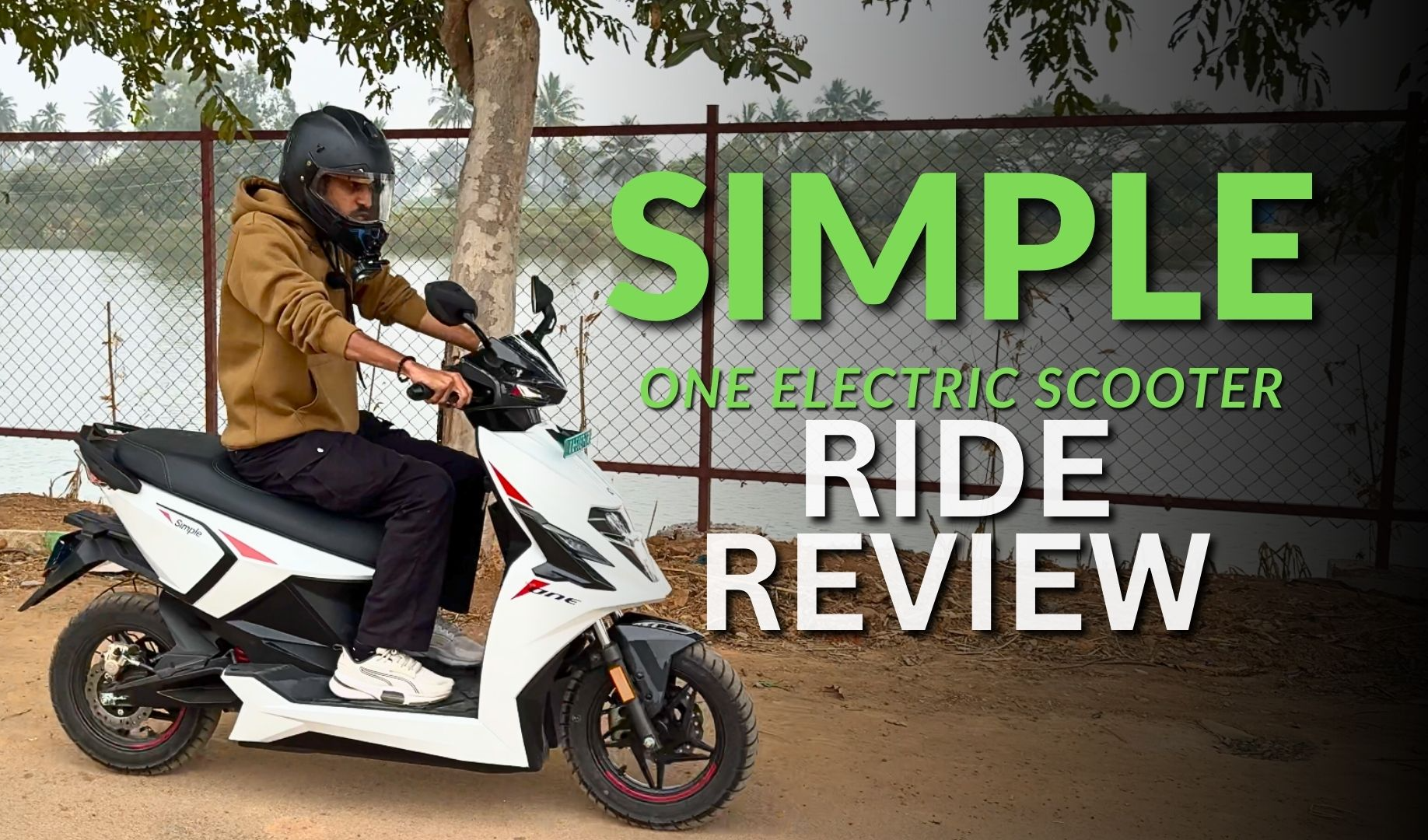
    Simple One Gen 2 Detailed Ride Review - Truth Behind 400KM Range

    Electric scooters are evolving fast, and Simple Energy is trying to carve its own space with a strong focus on range, performance, and everyday practicality. This Simple One Gen 2 ride review is based on an actual riding experience on Indian roads, not just spec sheets or showroom impressions. After spending proper time riding the scooter in city traffic, open stretches, and uneven patches, this blog covers everything that matters to a real buyer – comfort, throttle response, braking, ride quality, positives, negatives, and whether it makes sense for your usage. Design & Road Presence: Sporty Yet Practical The Simple One Gen 2 carries a sharp and purposeful design. It does not try to look futuristic just for attention, which actually works in its favour. The scooter looks sporty but still practical enough for daily commuting. Clean and aggressive front design Good LED headlamp visibility for city rides Improved panel fit and overall finish Approachable seat height for most riders On the road, the scooter has a solid presence. It attracts attention from EV enthusiasts without looking flashy or overdone. Riding Position & Comfort: Made for Daily Use Once you get on the Simple One Gen 2, the riding posture feels natural and comfortable. The handlebar height, seat cushioning, and footboard spacing are clearly designed keeping daily city riders in mind. Relaxed riding posture Wide and comfortable seat Decent pillion comfort for short to medium rides Good footboard space Even during longer rides, the scooter does not feel tiring, which is a big plus for office commuters. Performance & Throttle Response: Smooth and Predictable The Simple One Gen 2 is tuned for smooth performance rather than aggressive acceleration. Throttle response is predictable, which makes it easy to ride in traffic-heavy conditions. In Eco and Ride modes, acceleration feels calm and controlled. Higher modes make the scooter quicker, but it never feels jerky or difficult to manage. Overtakes in city traffic are easy, and the scooter builds speed confidently. Ride Quality & Suspension: Balanced for Indian Roads Ride quality is one of the highlights of the Simple One Gen 2. The suspension is tuned for Indian road conditions and handles most bumps and uneven surfaces well. Small potholes and rough patches are absorbed nicely Rear suspension feels slightly stiff on sharp bumps Good straight-line stability Confidence-inspiring ride at city speeds This scooter is clearly meant for urban riding rather than aggressive cornering or off-road usage. Braking & Safety: Confidence at All Times Braking performance on the Simple One Gen 2 feels reassuring. The braking setup offers good bite and remains progressive even during sudden stops. Strong and predictable braking feel Regenerative braking helps slow down smoothly Good control during panic braking situations In daily traffic, this braking setup adds to the overall confidence of the scooter. Range & Real-World Usability Range is one of the biggest reasons people consider the Simple One Gen 2. In real-world riding, range depends heavily on riding mode, speed, and traffic conditions. Eco modes help extract better range, while aggressive riding reduces overall efficiency. For city users who ride sensibly, the scooter offers practical and usable range figures. Features & Technology: Useful, Not Overcomplicated The digital dashboard and connected features feel well integrated. The interface is simple to understand and does not distract the rider. Clear digital display Multiple riding modes Regenerative braking levels Connected features that actually add value Positives of Simple One Gen 2 Comfortable and relaxed riding posture Smooth throttle response Good braking performance Stable ride quality Practical design for daily usage Easy to ride for new EV users Negatives & Areas for Improvement Rear suspension feels stiff on bad roads Not very exciting for performance-focused riders Charging infrastructure still expanding Weight is noticeable at very low speeds Who Should Buy the Simple One Gen 2? The Simple One Gen 2 is ideal for riders who want a comfortable, smooth, and practical electric scooter for daily commuting. It suits office-goers, city riders, and those switching from petrol scooters to electric. Who Should Avoid It? Riders looking for aggressive acceleration, sporty handling, or frequent rough-road usage may want to explore other options. Final Verdict: Is Simple One Gen 2 Worth Buying? The Simple One Gen 2 feels like a mature and well-thought-out electric scooter. It focuses on what matters the most for everyday users – comfort, usability, and confidence on the road. It may not be the most thrilling EV scooter available, but for riders who value smooth performance and real-world practicality, the Simple One Gen 2 is a solid option worth considering.

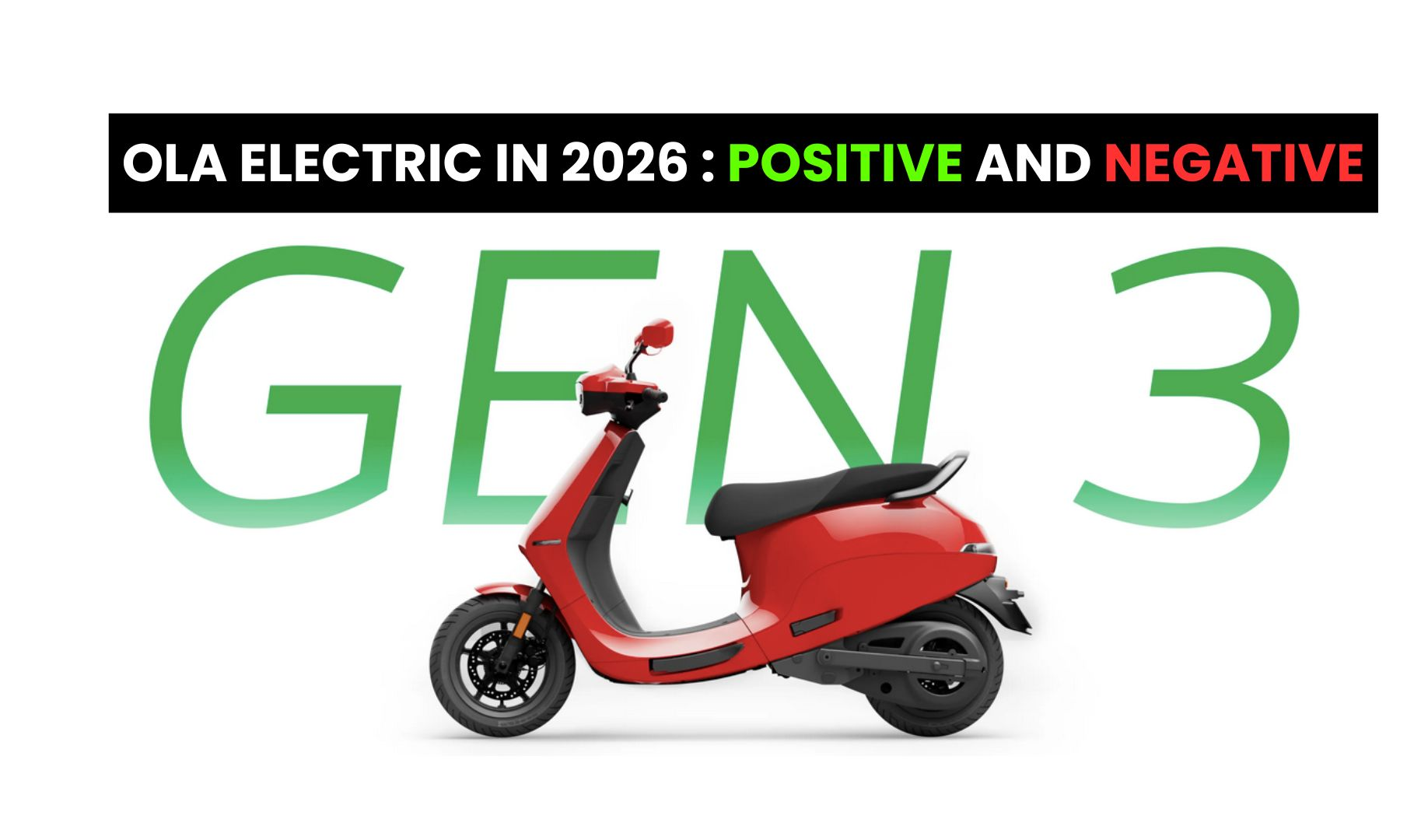
    Ola Electric Scooter in 2026 : Honest Positives and Negatives You Should Know Before Buying

    Electric scooters are no longer just a future concept in India — they are already a part of daily urban life. Among all EV brands, Ola Electric has created massive attention, excitement, and controversy. Some riders praise Ola for innovation, while others share frustrating ownership experiences. If you are planning to buy an Ola electric scooter or are confused by mixed reviews online, this detailed guide will help you understand the real positives and negatives before making a decision. Why Ola Electric Scooters Became So Popular Ola entered the electric two-wheeler market with a bold vision. Instead of launching a regular scooter, the company introduced a product that feels more like a smart gadget on wheels. From digital dashboards to software updates, Ola positioned itself as a technology-driven brand. This approach attracted young buyers, tech lovers, and first-time EV users. However, innovation always comes with challenges, and Ola is no exception. Positives of Ola Electric Scooter 1. Strong Performance and Instant Acceleration One of the biggest advantages of Ola electric scooters is instant torque. Unlike petrol scooters, there is no delay or vibration. The scooter responds immediately when you twist the throttle, making city riding smooth and enjoyable. This quick acceleration is especially useful in traffic, where overtaking slow vehicles becomes easier. For riders who enjoy a slightly sporty feel, Ola delivers impressive performance. 2. Competitive Real-World Range Range anxiety is a common concern among EV buyers, but Ola performs reasonably well in real-world conditions. While claimed figures may vary, the actual range is sufficient for daily commuting, office travel, and short city trips. For most urban users, charging once every few days is enough, making Ola a practical choice for daily use. 3. Feature-Rich Smart Scooter Experience Ola scooters offer a wide range of smart features that make them stand out from traditional scooters. These include a large touchscreen display, built-in navigation, Bluetooth music control, cruise control, and reverse mode. The software-driven experience appeals strongly to tech-savvy users who enjoy modern functionality. 4. Modern and Stylish Design Design plays a major role in Ola’s popularity. The scooter features clean body panels, LED lighting, and a futuristic appearance that looks premium on Indian roads. Many buyers choose Ola simply because it looks different and more advanced compared to conventional scooters. 5. Low Running and Maintenance Cost Electric scooters are significantly cheaper to run than petrol scooters. With no fuel costs and fewer mechanical components, Ola scooters require less maintenance over time. 6. Regular Software Updates Ola improves its scooters through over-the-air software updates. New features, bug fixes, and performance improvements can be delivered without visiting a service center. This ability to evolve through software is a major advantage, provided updates remain stable. Negatives of Ola Electric Scooter 1. Build Quality Issues One of the most reported concerns among users is inconsistent build quality. Some owners have noticed panel gaps, loose fittings, and average plastic quality. While not every scooter faces these issues, quality inconsistency affects buyer confidence. 2. Software Bugs and Stability Problems The same software-driven approach that makes Ola exciting also creates problems. Users have reported screen freezing, navigation errors, and app connectivity issues. Although updates fix many bugs, frequent glitches can be frustrating during daily use. 3. Long Charging Time Charging an electric scooter takes more time than refueling a petrol vehicle. Home charging can take several hours, which requires planning. Fast charging options exist, but availability is still limited in many areas. 4. Service Network and Customer Support After-sales service is one of the biggest complaints from Ola owners. Many users face delays in service appointments, slow responses, and limited service centers in smaller cities. Poor service experience can significantly impact long-term ownership satisfaction. 5. Ride Comfort and Suspension Ola scooters perform well on smooth roads, but suspension tuning may feel stiff on rough or uneven surfaces. On bad roads, ride comfort can be compromised, especially for pillion riders. 6. Heavy Dependence on Software Since many features rely on software and connectivity, issues like poor network coverage or app errors can affect functionality. Riders who prefer simple, mechanical scooters may find this dependence inconvenient. Who Should Buy an Ola Electric Scooter? Ola is suitable for riders who: Love modern technology and smart features Commute daily in city traffic Want low running costs Enjoy quick acceleration Live in cities with good service coverage You should reconsider if: You prioritize long-term reliability over features You live in an area with limited service centers You prefer simple, no-tech scooters You expect premium build quality without compromise Final Verdict: Is Ola Electric Scooter Worth Buying? Ola electric scooters represent bold innovation in India’s EV market. They offer modern design, strong performance, and advanced features. However, they also come with challenges related to service quality, build consistency, and software stability. If you buy an Ola scooter with realistic expectations and proper research, it can be an excellent daily commuter. But if hassle-free ownership is your top priority, comparing alternatives is a smart move. Do not buy Ola because of hype alone. Do not reject Ola because of complaints alone. Understand your needs, then decide.

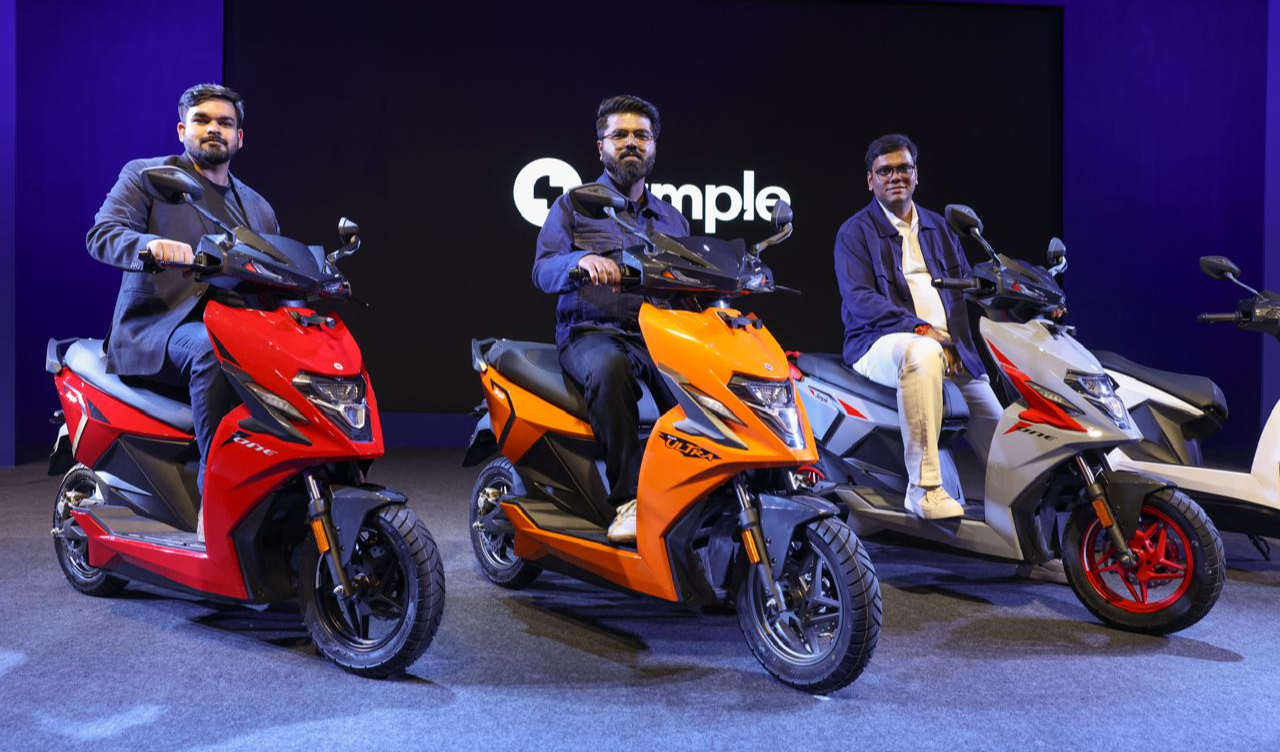
    Simple Energy Launches Gen 2 Electric Scooters: 400KM Range in Single Charge

    The Indian electric two-wheeler market is evolving rapidly, but range anxiety, real-world performance, and long-term reliability continue to be major concerns for buyers. Addressing these challenges directly, Simple Energy has officially launched its Gen 2 electric scooter lineup, bringing meaningful upgrades across performance, range, technology, and durability. With the introduction of Simple Ultra, Simple One Gen 2, and Simple OneS Gen 2, the company has set new benchmarks in electric mobility. The highlight of this launch is India’s first electric scooter with a 400 km IDC-certified range, a milestone that reshapes expectations from electric two-wheelers. Simple Energy’s Vision Behind the Gen 2 Launch Simple Energy has always followed an engineering-first approach, focusing on real-world usability rather than marketing-driven numbers. The Gen 2 portfolio reflects this philosophy clearly. Instead of offering one product for everyone, the brand has expanded its lineup to cater to different rider needs. From daily commuters to long-distance riders and performance enthusiasts, the Gen 2 range aims to eliminate compromise while strengthening consumer trust in electric mobility. Simple Ultra: India’s Longest-Range Electric Scooter The biggest highlight of the Gen 2 lineup is the Simple Ultra, which becomes India’s longest-range electric scooter with an IDC-certified range of 400 km. Key Specifications of Simple Ultra Battery capacity: 6.5 kWh IDC range: 400 km Top speed: 115 kmph 0–40 kmph acceleration: 2.77 seconds Simple Ultra is designed for riders who travel long distances daily and want complete freedom from frequent charging concerns. Simple One Gen 2: Two Battery Options for Different Riders The Simple One Gen 2 is available in two battery variants, offering flexibility based on riding style and budget. Simple One Gen 2 – 4.5 kWh Variant IDC range: 236 km Peak power: 6.4 kW Torque: 52 Nm Top speed: 90 kmph 0–40 kmph: 3.3 seconds Price: ₹1,69,999 (ex-showroom) This variant is ideal for daily commuters who want strong range and smooth performance at a balanced price. Simple One Gen 2 – 5 kWh Variant IDC range: 265 km Peak power: 8.8 kW Torque: 72 Nm Top speed: 115 kmph 0–40 kmph: 2.55 seconds Price: ₹1,77,999 (ex-showroom) This variant targets riders who want higher performance along with extended range, suitable for both city and highway use. Major Upgrades in Simple One Gen 2 Kerb weight reduced by 8 kg 35-litre underseat storage Lower seat height of 780 mm New glove box and charging port Traction control and cruise control Four-level regenerative braking Simple OneS Gen 2: Performance Made More Accessible The Simple OneS Gen 2 offers a balanced mix of performance, range, and affordability. Key Specifications of Simple OneS Gen 2 Battery: 3.7 kWh IDC range: 190 km Peak power: 6.5 kW Torque: 52 Nm Top speed: 90 kmph 0–40 kmph: 3 seconds Price: ₹1,49,999 (ex-showroom) With reduced weight and improved braking, the OneS Gen 2 is ideal for urban riders who want performance without stretching the budget. Connected Technology and Smart Features 7-inch touchscreen display (Simple One Gen 2) Bluetooth connectivity and call management Built-in navigation OTA software updates Find My Vehicle and TPMS Lifetime Warranty: Building Long-Term Confidence Simple Energy now offers a lifetime warranty on the motor and battery across its Gen 2 lineup. This is supported by a 3-year vehicle warranty and a 3-year charger warranty, addressing long-term ownership concerns. Availability and Expansion Plans The Gen 2 scooters are available through more than 61 showrooms and major online platforms. Simple Energy plans to expand aggressively with 150 dealerships and 200 service centers by March 2026. Final Verdict The launch of Simple Energy’s Gen 2 electric scooters marks a major step forward for India’s EV ecosystem. With class-leading range, strong performance, advanced technology, and lifetime warranty, the Gen 2 lineup delivers confidence and practicality. For riders looking for future-ready electric mobility without compromise, Simple Energy’s Gen 2 scooters set a new standard.

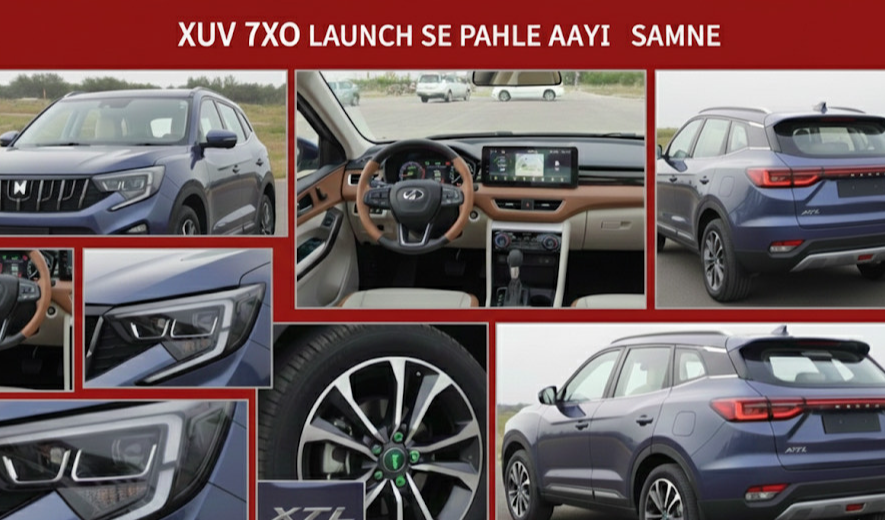
    MAHINDRA XUV 7XO LAUNCH SE PHLE AAYI SAMNE

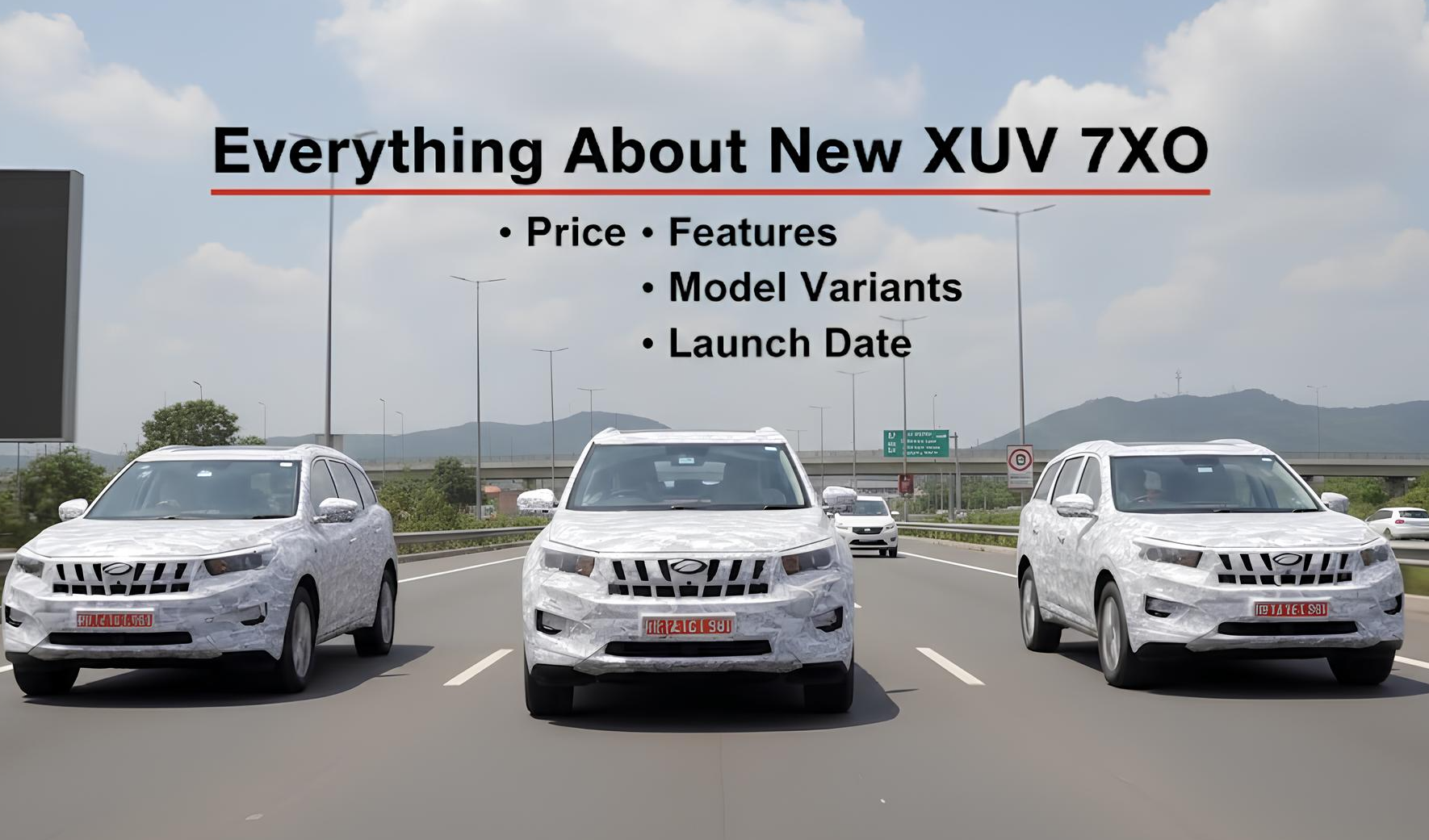
    Mahindra SUV segment me already strong position hold karta hai, aur ab Mahindra XUV 7XO ke new design leaks ne market me kaafi excitement create kar di hai. Official launch se pehle hi saamne aayi images ye clearly show karti hain ki Mahindra is baar sirf cosmetic update nahi, balki ek complete premium upgrade la raha hai. Bold Exterior Design Jo Road Par Attention Grab Kare Leaked images ke according Mahindra XUV 7XO apni muscular SUV identity ko continue karta hai. Front grille ka design zyada sharp hai, vertical slats ke sath Mahindra ka twin-peaks logo SUV ko ek powerful road presence deta hai. Naye LED headlamps aur unka aggressive light signature Mahindra XUV 7XO ko pehle se zyada modern aur premium banata hai. 19-Inch Alloy Wheels Se Aur Zyada Strong Stance Side profile ka biggest highlight hai 19-inch alloy wheels. Itne bade wheels normally premium SUVs me milte hain, aur Mahindra XUV 7XO ke case me ye SUV ki stance ko aur bhi bold bana dete hain. All-New Interior With Triple Screen Setup Cabin ke andar sabse bada upgrade hai triple-screen layout. Leaked interior images me clearly dikh raha hai: Fully digital instrument cluster Large touchscreen infotainment system Additional display for vehicle functions Ye setup Mahindra XUV 7XO ko segment ki sabse tech-loaded SUVs me shamil kar deta hai. Ventilated Seats: Indian Climate Ke Liye Perfect Indian weather ko dhyan me rakhte hue, Mahindra XUV 7XO me ventilated front seats add ki ja rahi hain. Traffic ho ya long drive, ye feature comfort level ko kaafi improve karta hai. New Premium Key Design Leaked images me Mahindra XUV 7XO ki new key design bhi saamne aayi hai. Ye pehle se zyada premium feel deti hai aur overall ownership experience ko enhance karti hai. ADAS Level 2 Plus: Safety Me Bada Step Safety ke mamle me Mahindra XUV 7XO kaafi strong upgrade ke sath aa raha hai. Is SUV me ADAS Level 2 Plus technology milne ki ummeed hai. Adaptive Cruise Control Lane Keep Assist Forward Collision Warning Automatic Emergency Braking Ye features highway driving ko aur zyada safe aur stress-free bana dete hain. Variants Same, Experience Bilkul Naya Achhi baat ye hai ki Mahindra XUV 7XO ke variants me zyada changes nahi honge. Matlab familiar variant structure ke sath buyers ko ab better design aur advanced features milenge. Buyers Ke Liye Ye Upgrade Kya Matlab Rakhta Hai? Agar aap ek aisi SUV chahte ho jo bold ho, tech-loaded ho aur safety ke mamle me strong ho, to Mahindra XUV 7XO aapke liye ek solid option ban sakti hai. Final Verdict Leaks ke base par clearly kaha ja sakta hai ki Mahindra XUV 7XO sirf ek facelift nahi, balki ek well-planned major upgrade hai. Agar pricing aggressive rakhi gayi, to ye SUV apne segment me strong impact create karegi.

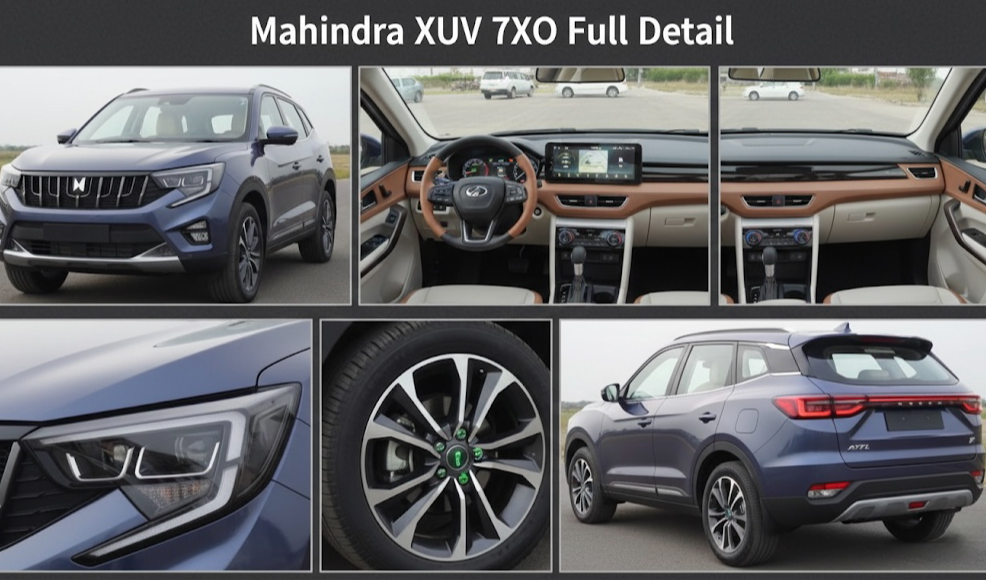
    Mahindra XUV 7XO-New Design Leaks Reveal a Big Interior Upgrade and Premium Road Presence

    Mahindra is clearly not slowing down in the SUV race, and the latest leaked images of the Mahindra XUV 7XO prove exactly that. Even before an official reveal, these images give us a strong idea of how serious Mahindra is about upgrading its premium SUV lineup. From a refreshed exterior stance to a completely revamped cabin loaded with modern technology, the Mahindra XUV 7XO looks ready to raise expectations in its segment. Bold Exterior Design That Commands Attention The leaked images show that the Mahindra XUV 7XO carries forward Mahindra’s bold and muscular SUV DNA. The front fascia looks sharper, featuring a redesigned grille with vertical slats and the updated twin-peaks Mahindra logo. The LED headlamps now feature a more aggressive light signature, giving the Mahindra XUV 7XO a modern and premium face. 19-Inch Alloy Wheels Enhance Road Presence One of the standout exterior upgrades on the Mahindra XUV 7XO is the new 19-inch alloy wheels. These larger wheels significantly improve the SUV’s stance and add a sporty, upmarket feel. Completely New Interior With Triple-Screen Layout The biggest upgrade in the Mahindra XUV 7XO is its all-new interior. The leaked images reveal a modern three-screen setup that includes: Digital instrument cluster Large touchscreen infotainment system Additional display for vehicle or co-passenger functions This triple-screen layout places the Mahindra XUV 7XO among the most tech-forward SUVs in its category. Ventilated Seats for Everyday Comfort Another premium addition to the Mahindra XUV 7XO is ventilated front seats. This feature is extremely useful in Indian weather conditions, making long drives and daily commutes far more comfortable. With ventilated seats, the Mahindra XUV 7XO clearly focuses on enhancing real-world usability. New Key Design Adds Premium Feel The leaked images also reveal a redesigned key for the Mahindra XUV 7XO. While it may seem like a small update, a new key design adds to the premium ownership experience and reflects Mahindra’s attention to detail. ADAS Level 2 Plus: Major Safety Upgrade The Mahindra XUV 7XO is expected to come equipped with ADAS Level 2 Plus, making it one of the safer SUVs in its segment. Expected ADAS features include: Adaptive cruise control Lane keep assist Forward collision warning Automatic emergency braking Traffic assist systems This safety upgrade makes the Mahindra XUV 7XO especially suitable for highway driving. Same Variants, Better Overall Experience Despite these upgrades, the Mahindra XUV 7XO is expected to retain the same variant lineup as the current model. This means buyers get familiar choices with a significantly enhanced feature list. Improved Cabin Quality and Practical Design The cabin of the Mahindra XUV 7XO appears more refined, with better material quality, improved fit and finish, and a cleaner dashboard layout. The center console looks well-integrated, offering smart storage solutions and a modern gear selector design. What This Means for Buyers With these updates, the Mahindra XUV 7XO is shaping up to be a strong contender in the premium SUV space. Buyers looking for bold styling, advanced technology, modern safety features, and comfort-focused upgrades will find this SUV very appealing. Final Thoughts Based on the leaked images, the Mahindra XUV 7XO feels like a well-executed upgrade rather than a simple facelift. It combines aggressive design, a tech-loaded interior, and advanced safety features in a balanced way. If priced competitively, the Mahindra XUV 7XO has the potential to set new benchmarks in its segment.

    0 175 0

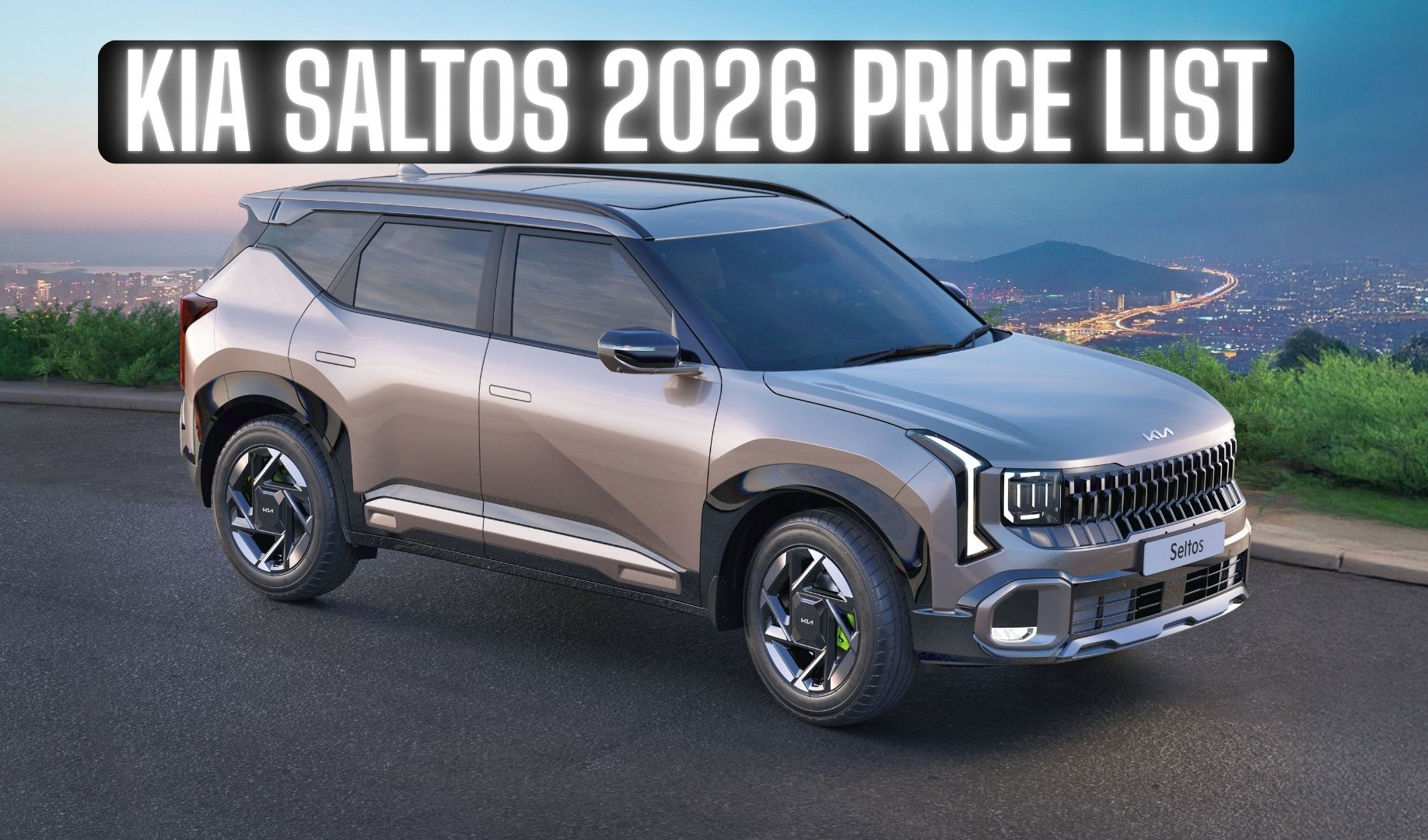
    All-New Kia Seltos Variant-Wise Price List & Detailed Breakdown – Best SUV for 2026?

    Kia Seltos Variant-Wise Price List 2026Kia Seltos Variant-Wise Price List 2026: Features, Prices & Best Variant ExplainedThe mid-size SUV segment continues to grow rapidly, and the all-new Kia Seltos remains one of the most searched and discussed SUVs in India.With a wide range of variants, multiple engine options, and competitive pricing, the Seltos caters to almost every type of SUV buyer.In this blog, we provide a complete Kia Seltos variant-wise price list, along with a clear explanation of what each variant offers and who should consider buying it.Why Kia Seltos Is Still a Top SUV Choice in 2026The Kia Seltos consistently ranks high in searches like best SUV 2026 and top mid-size SUV because it delivers:Modern design with strong road presencePetrol and diesel engine optionsManual, automatic, and DCT gearboxesFeature-loaded variants across price pointsThis flexibility is what makes the Seltos appealing to a wide audience.Kia Seltos Variant-Wise Price List (Ex-Showroom)HTE Variants (Base Trim)HTE Petrol MT – ₹10.90 lakhHTE Diesel MT – ₹11.99 lakhWho is it for?The HTE variant is ideal for buyers who want the Kia Seltos design and reliability at the lowest price.It focuses on essentials, making it a good choice for budget-conscious SUV buyers.HTK Variants (Value-Focused Trim)HTK Petrol MT – ₹12.30 lakhHTK Petrol iMT – ₹12.99 lakhHTK Diesel MT – ₹13.35 lakhWhy choose HTK?The HTK variant adds more comfort and convenience features compared to HTE.It offers a strong balance between price and features, suitable for city driving and highway use.HTK+ Variants (Feature Upgrade)HTK+ Petrol MT – ₹13.40 lakhHTK+ Petrol iMT – ₹14.05 lakhHTK+ Diesel MT – ₹14.55 lakhHTK+ Diesel AT – ₹15.95 lakhBest for:Buyers looking for better interiors, added technology, and improved comfort without entering premium pricing.HTK+ is especially popular among family buyers.HTX Variants (Premium Balance)HTX Petrol MT – ₹14.40 lakhHTX Petrol iMT – ₹15.05 lakhHTX Diesel MT – ₹15.95 lakhHTX Diesel AT – ₹17.35 lakhWhy HTX is the sweet spot:HTX offers a premium cabin feel, advanced infotainment, and enhanced comfort.It is widely considered the best value Kia Seltos variant for long-term ownership.HTX+ Variants (Luxury-Oriented)HTX+ Petrol Turbo iMT – ₹18.20 lakhHTX+ Petrol Turbo DCT – ₹19.20 lakhHTX+ Diesel AT – ₹19.90 lakhIdeal buyer:Buyers seeking a luxurious cabin, powerful engines, and advanced technology.HTX+ delivers a near-premium SUV experience.GT Line Variants (Sporty & Performance-Focused)GT Line Petrol Turbo iMT – ₹19.40 lakhGT Line Petrol Turbo DCT – ₹20.40 lakhGT Line Diesel AT – ₹20.90 lakhWho should buy GT Line?GT Line variants are designed for buyers who want sporty styling, top-end features,and strong performance.This is the most premium Seltos lineup.Which Kia Seltos Variant Should You Choose?Lowest budget, essential use: HTEValue-for-money features: HTK / HTK+Best overall balance: HTXPremium comfort & technology: HTX+Sporty & top-end SUV: GT LineYour final choice should depend on your driving needs, budget, and feature preferences.Is Kia Seltos the Best SUV for 2026?With a wide price range, multiple engine and gearbox options, strong resale value,and proven reliability, the Kia Seltos continues to be a strong contender for anyone searching for the best SUV in 2026.Final VerdictThe all-new Kia Seltos stands out by offering something for everyone.Whether you are upgrading from a hatchback or looking for a premium mid-size SUV,the Seltos lineup delivers flexibility, modern features, and solid performance.If you want a future-ready SUV with multiple choices, the Kia Seltos deserves serious consideration.  

    0 119 0

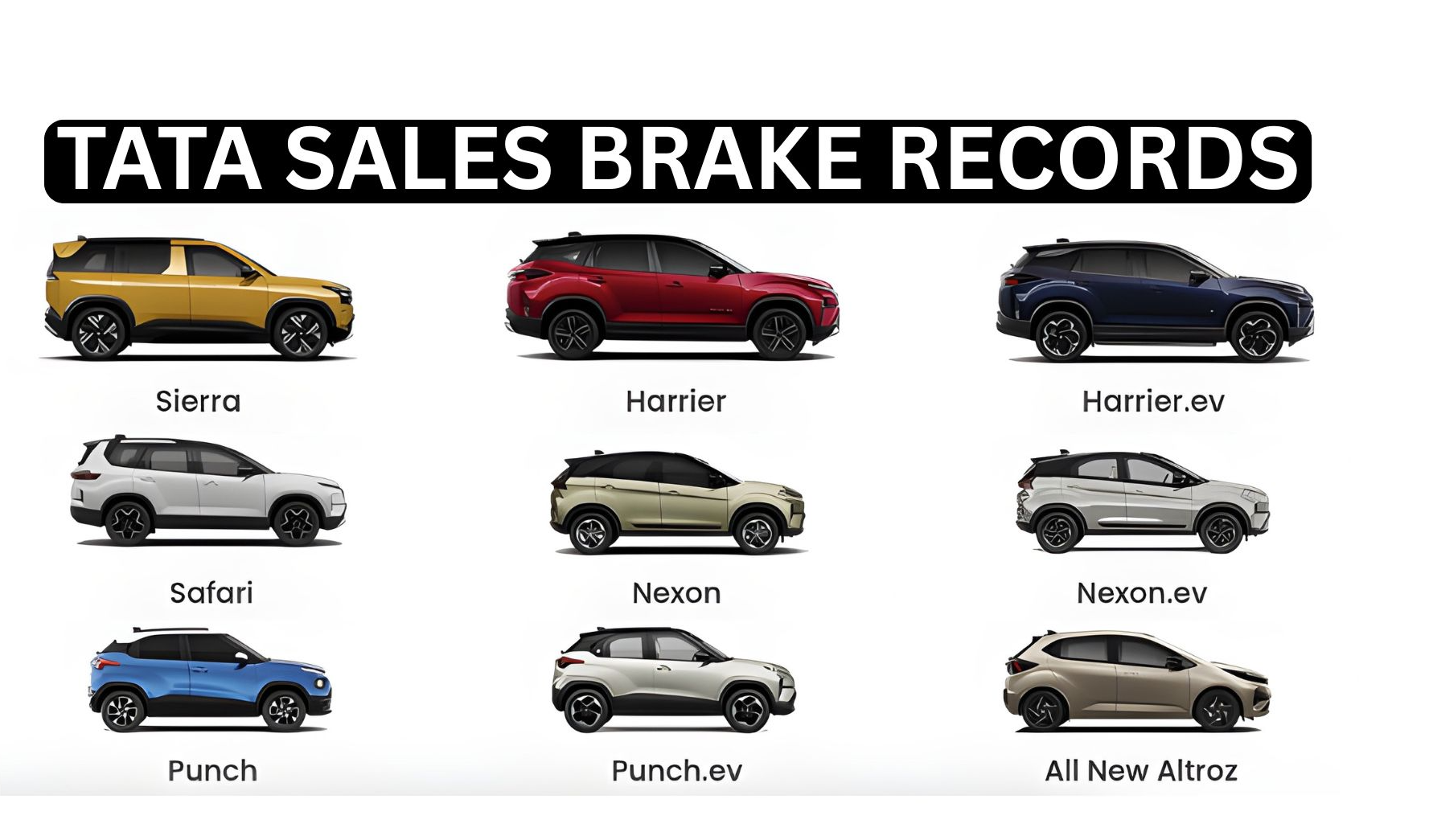
    Tata Motors Passenger Vehicles Q3 FY26 Performance: Strong Growth, Record Sales and Rising EV Momentum

    Tata Motors Passenger Vehicles Ltd. has once again demonstrated why it remains one of the most influential players in India’s automotive industry. The company’s Q3 FY26 performance highlights a clear strategy built around strong product demand, disciplined channel management, and a sharp focus on cleaner powertrains. At a time when the passenger vehicle market is becoming increasingly competitive, Tata Motors has not only maintained its momentum but has also set new benchmarks across sales, retail performance, and electric vehicle adoption. Record-Breaking Q3 FY26 Sales Performance During Q3 FY26, Tata Motors Passenger Vehicles recorded total sales of 171,013 units across domestic and international markets, marking a significant rise compared to the same quarter last year This growth reflects sustained demand across multiple segments, including hatchbacks, SUVs, and electric vehicles. Domestic passenger vehicle sales stood at 168,616 units, showing strong year-on-year expansion. International business, though smaller in volume, witnessed sharp growth, underlining Tata Motors’ expanding global footprint. What stands out is not just the sales number, but the consistency. This quarter marked Tata Motors’ highest-ever quarterly wholesales, reinforcing the company’s ability to scale operations while maintaining market relevance. Retail Strength and Healthy Dealer Inventory One of the most positive indicators from Q3 FY26 was the balance between wholesales and retail demand. Tata Motors achieved retail sales that exceeded wholesales, which helped reduce dealer inventory to around 18 days. This reflects a demand-led growth approach rather than pushing excess stock into the channel. In an industry where inventory management often becomes a challenge, Tata Motors’ disciplined strategy strengthens dealer confidence and long-term brand health. SUVs Continue to Drive Growth SUVs remained a major growth driver for Tata Motors during Q3 FY26. The company recorded an 18% year-on-year increase in SUV volumes, supported by strong demand for models like Nexon, Punch, Harrier, and Safari. The Tata Nexon emerged as a clear highlight, leading the market as India’s top-selling car and SUV during October and November. With quarterly sales nearing 64,000 units, the Nexon continues to be a cornerstone of Tata Motors’ success. Similarly, the Tata Punch maintained its dominance in its segment, while the Tiago delivered steady growth, reinforcing Tata Motors’ strong presence in the hatchback category. Electric Vehicle Sales See Accelerated Growth Electric vehicles played a crucial role in Tata Motors’ Q3 FY26 story. Combined domestic and international EV sales reached 24,103 units, representing an impressive 49.5% year-on-year growth This surge reflects growing consumer confidence in Tata’s EV ecosystem. Factors such as: Improved driving range Enhanced vehicle capabilities Lifetime battery warranty Competitive pricing close to ICE vehicles have significantly boosted EV adoption. Tata Motors’ electric portfolio is no longer seen as experimental. It has matured into a practical and trusted choice for everyday buyers. Multi-Powertrain Strategy Pays Off A key strength of Tata Motors lies in its multi-powertrain approach. Instead of focusing on a single fuel type, the company has balanced offerings across petrol, diesel, CNG, and electric powertrains. During Q3 FY26: CNG volumes crossed 47,000 units EV sales showed strong acceleration ICE vehicles continued to deliver stable demand This diversified strategy allows Tata Motors to cater to a wider audience while adapting to changing regulations and consumer preferences. New Product Introductions Strengthen Portfolio Q3 FY26 also marked important product milestones. Tata Motors introduced: Harrier and Safari with petrol powertrains The much-anticipated Tata Sierra, which received a strong initial response These launches expand Tata Motors’ appeal across customer segments and reinforce its SUV leadership. The Sierra, in particular, represents Tata’s forward-looking approach, combining nostalgia with modern design and technology. Five Consecutive Years of Record Annual Sales Beyond the quarterly performance, Tata Motors achieved a major milestone in calendar year 2025. The company recorded its fifth consecutive year of record-breaking annual sales, delivering 587,218 units, including 81,125 electric vehicles in a single year This long-term consistency highlights strong execution, timely product decisions, and a deep understanding of market trends. EV Leadership Strengthens Brand Positioning Tata Motors’ leadership in the electric passenger vehicle segment has become a defining strength. The company’s ability to offer EVs with: Practical real-world range Competitive pricing Strong after-sales support has played a major role in accelerating adoption. With EV sales growing faster than the overall market, Tata Motors is well positioned to benefit from India’s transition towards cleaner mobility. Outlook for FY26: Confident and Forward-Looking Looking ahead, Tata Motors Passenger Vehicles remains optimistic about industry growth. Deliveries of newly introduced products are set to begin in Q4, and the company has an active pipeline of upcoming launches and innovations. With improved supply chains, growing EV acceptance, and strong demand for SUVs, Tata Motors is well placed to continue its growth trajectory through FY26. Final Thoughts Tata Motors Passenger Vehicles’ Q3 FY26 performance is more than just a strong quarterly result. It reflects a well-executed strategy built on product strength, powertrain diversity, disciplined sales management, and long-term vision. As the passenger vehicle market evolves, Tata Motors continues to balance growth with sustainability, making it one of the most closely watched automotive brands in India today.

    0 124 0

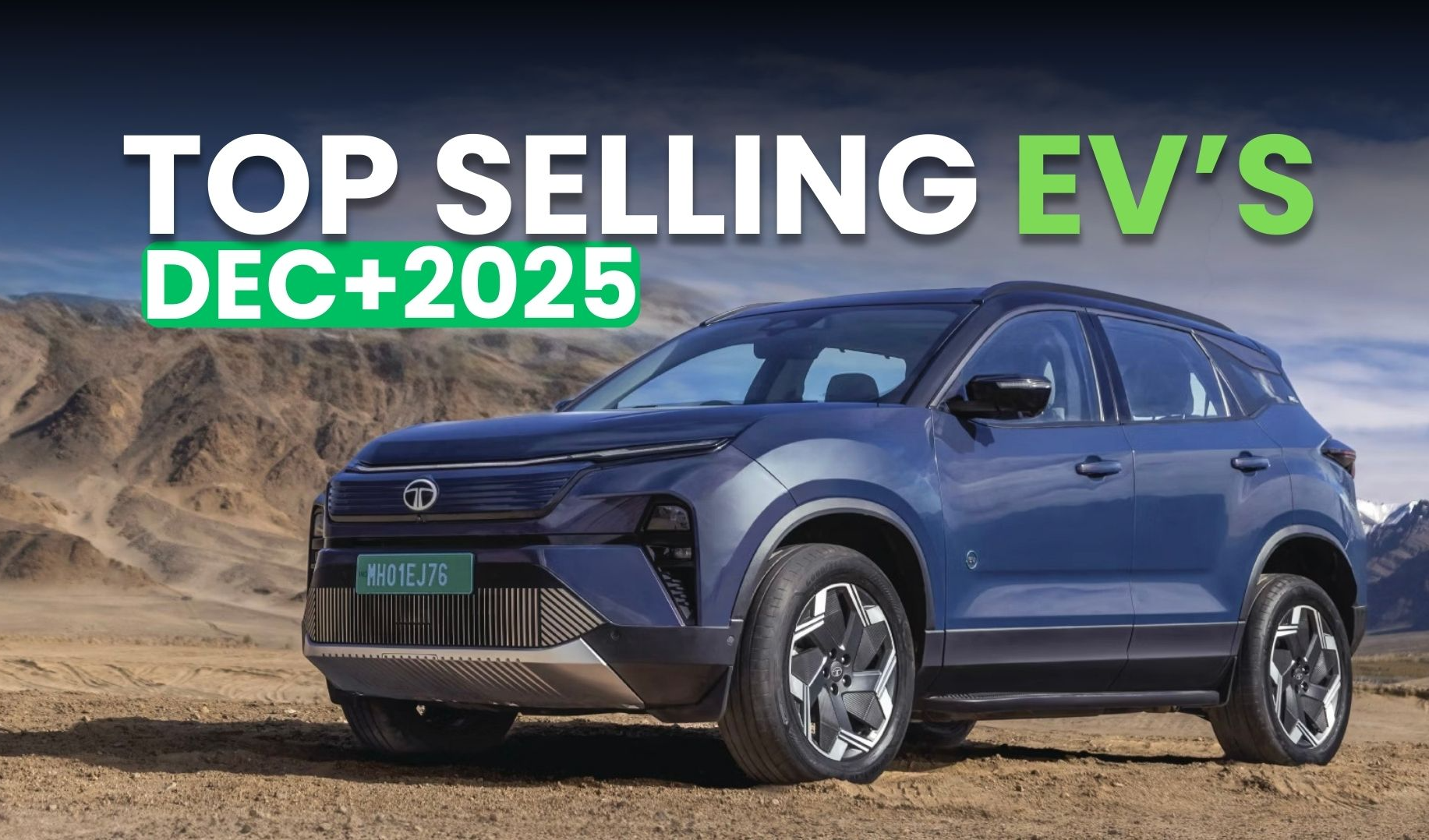
    Electric Car Sales December 2025-Tata and JSW MG Ruled Electric Vehicle in india

    India’s electric passenger vehicle market witnessed a significant transformation in 2025. With growing acceptance of EV technology, improved charging infrastructure, and wider model availability, electric cars are no longer limited to early adopters. This detailed analysis of electric car sales 2025, electric car sales December 2025, and electric four-wheeler EV sales covers brand-wise performance using November, December, 2024, and 2025 data, along with MoM growth, YoY growth, and market share insights. Overall Electric Car Market Overview Total Electric Car Sales 2025: 169,901 units Total Sales – Nov 2025: 15,151 units Total Sales – Dec 2025: 14,469 units Month-on-Month Market Change: –4.5% The slight dip in December reflects year-end normalization, fleet procurement timing, and waiting periods for upcoming model refreshes. Brand-Wise Electric Car Sales Performance 1. Tata Motors Tata Motors continues to be the undisputed leader of India’s electric car market. Sales 2024: 55,173 Sales 2025: 65,802 Nov 2025: 6,176 Dec 2025: 6,198 YoY Growth: +19.3%MoM Growth: +0.4% December Market Share: ~42.8% Full-Year Market Share 2025: ~38.7% Tata’s stable MoM performance shows consistent retail demand, even when the overall market softened. 2. JSW MG Motor JSW MG emerged as the fastest-scaling electric car brand in India during 2025. With a strong mix of premium positioning and competitive pricing, MG significantly expanded its footprint. Sales 2024: 20,842 Sales 2025: 50,554 Nov: 3,816 Dec: 3,524 YoY Growth: +142.6%MoM Growth: –7.7% December Market Share: ~24.4% Market Share 2025: ~29.7% MG’s strong YoY growth highlights rapid brand acceptance in the EV SUV space. 3. Mahindra Mahindra’s electric strategy gained real traction in 2025. Known for rugged SUVs, the brand successfully transferred its core strengths into the EV segment. Sales 2024: 6,607 Sales 2025: 30,057 Nov: 2,959 Dec: 2,864 YoY Growth: +355%MoM Growth: –3.2% December Market Share: ~19.8% 2025 Market Share: ~17.7% Mahindra emerged as one of the biggest gainers, driven by rising interest in electric SUVs. 4. VinFast VinFast entered the Indian EV space cautiously in 2025, focusing on brand awareness rather than aggressive volumes. Sales 2025: 825 Nov: 308 Dec: 375 MoM Growth: +21.7% December Market Share: ~2.6% 2025 Market Share: ~0.5% VinFast was among the few brands with positive MoM growth in December, indicating rising curiosity among buyers. 5. BMW BMW continued to dominate the luxury electric car segment, catering to high-end urban customers. Sales 2024: 1,202 Sales 2025: 3,185 Nov: 280 Dec: 343 YoY Growth: +165%MoM Growth: +22.5% December Market Share: ~2.4% 2025 Market Share: ~1.9% BMW’s December growth reflects strong premium EV demand at year-end   6. Kia Kia’s EV volumes remained relatively limited but focused on select premium buyers looking for refined electric driving experiences. Sales 2024: 415 Sales 2025: 2,601 Nov: 477 Dec: 296 YoY Growth: +526%MoM Growth: –37.9% December Market Share: ~2.0% 2025 Market Share: ~1.5% Despite low volumes, Kia showed strong percentage growth, indicating future potential. 7. Hyundai Hyundai’s electric car sales saw noticeable improvement in 2025, supported by its strong brand trust and growing EV awareness. Sales 2024: 912 Sales 2025: 6,693 Nov: 388 Dec: 262 YoY Growth: +634%MoM Growth: –32.5% December Market Share: ~1.8% Market Share 2025: ~3.9% Hyundai’s numbers indicate early-stage expansion, with future launches expected to boost volumes further.   8. BYD BYD continued to build its reputation as a technology-driven global EV brand in India, mainly operating in the premium segment. Sales 2024: 2,712 Sales 2025: 5,107 Nov: 430 Dec: 229 YoY Growth: +88.3%MoM Growth: –47.5% December Market Share: ~1.7]% 2025 Market Share: ~3.0% BYD’s sharp December decline reflects supply cycles and high-ticket pricing sensitivity. 9. Mercedes-Benz Mercedes-Benz maintained a steady presence in the luxury EV space, focusing on premium customers. Sales 2024: 953 Sales 2025: 1,167 Nov: 77 Dec: 68 YoY Growth: +22.4%MoM Growth: –11.7% December Market Share: ~0.5% 2025 Market Share: ~0.7% Mercedes continues to operate as a niche luxury EV brand in India. 10. Tesla Tesla’s presence in India remained extremely limited in 2025, mainly through imports and pilot entries. Sales 2025: 225 Nov: 48 Dec: 68 MoM Growth: +41.7% December Market Share: ~0.5% 2025 Market Share: ~0.13% Even with small numbers, Tesla generated high brand interest and visibility. Key Insights from Electric Car Sales 2025 Tata Motors remains the clear market leader MG and Mahindra are driving mass-market expansion Luxury EVs show strong December momentum New entrants are gradually building demand Final Summary The electric car sales 2025 data confirms that India’s EV market is no longer experimental. With nearly 1.7 lakh electric cars sold, the segment has entered a structured growth phase. Final Thoughts Analyzing MoM growth, YoY growth, and market share at both monthly and yearly levels provides deep insight into real market momentum. Brands showing stability in December are best positioned for growth in 2026.

    0 160 0

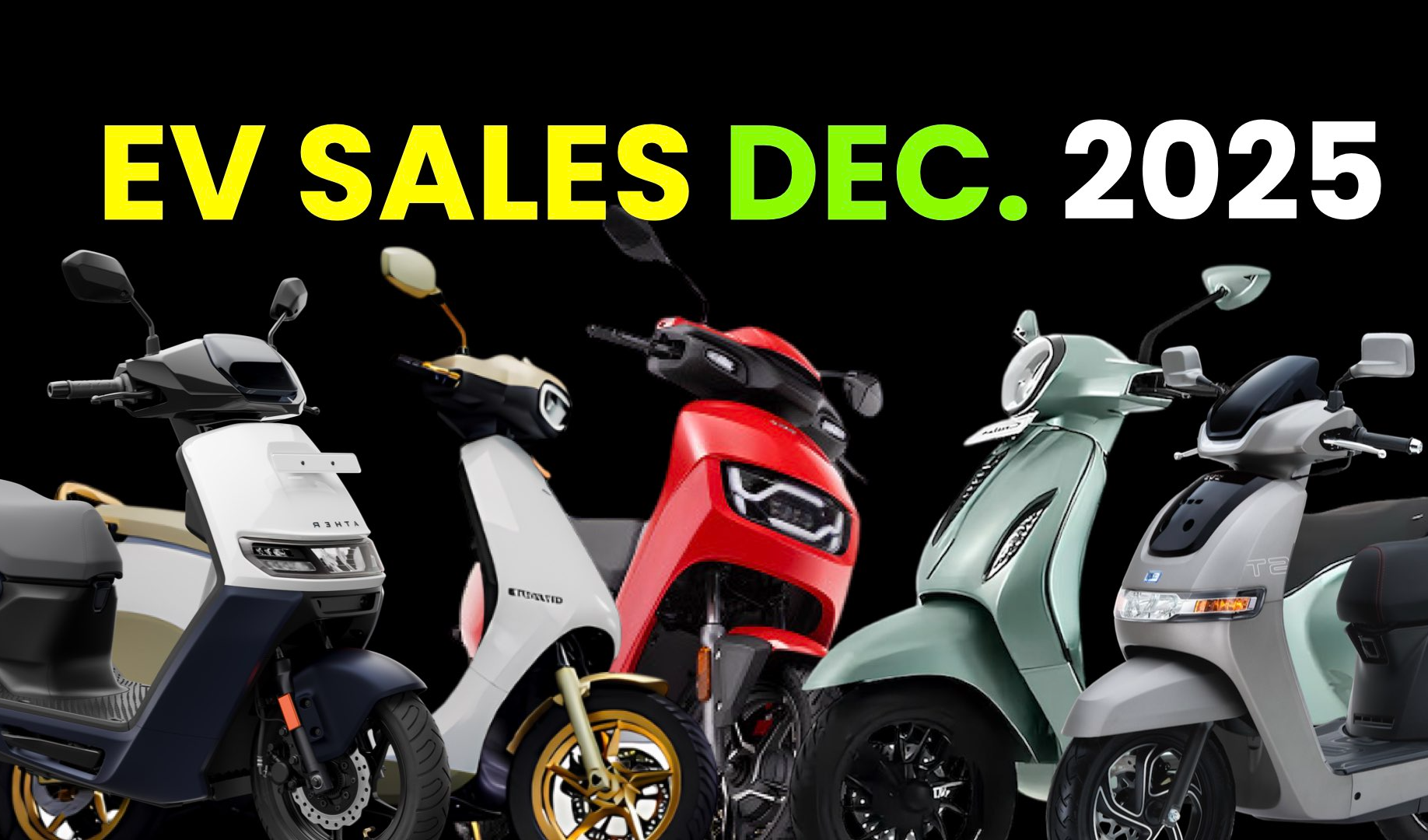
    Bajaj Chetak and TVS Sales Higher Electric Vehicles- Electric Two-Wheeler Sales 2025

    The Indian electric mobility ecosystem continued its steady expansion in 2025, with electric two-wheelers remaining the backbone of EV adoption. Rising fuel prices, improved charging infrastructure, and increasing consumer confidence pushed more buyers toward electric scooters and motorcycles. This detailed report on electric two wheeler sales 2025, electric two wheeler sales Dec 2025, and electric 2W sales 2025 provides a brand-wise breakdown using November, December, 2024, and 2025 data, combined with MoM growth, YoY growth, and market share analysis. Overall Electric Two-Wheeler Market Performance Total Sales 2024: 1,149,200 units Total Sales 2025: 1,279,966 units Year-on-Year Market Growth: +11.4% Total Nov 2025 Sales: 116,849 units Total Dec 2025 Sales: 97,380 units Month-on-Month Change: –16.7% The December slowdown reflects seasonal correction after festive demand, a trend commonly seen across the two-wheeler industry. Brand-Wise Electric Two-Wheeler Sales Analysis 1. TVS Motor Company Ltd TVS Motor Company has emerged as the most consistent and balanced electric two-wheeler brand in India. Its strong dealer network, trusted brand image, and focus on real-world usability have helped TVS dominate both monthly and yearly charts. Sales 2024: 220,829 Sales 2025: 298,897 Nov 2025: 30,584 Dec 2025: 25,039 YoY Growth: +35.3%MoM Growth: –18.1% December Market Share: ~25.7% Full-Year Market Share 2025: ~23.35% Despite a December dip, TVS retained its leadership position, proving its ability to sustain volumes even during market corrections. 2. Bajaj Auto Ltd Bajaj Auto’s electric strategy focuses on durability, reliability, and premium positioning. With strong acceptance in urban and semi-urban markets, Bajaj has successfully transitioned a section of ICE buyers to electric. Sales 2024: 193,661 Sales 2025: 269,837 Nov: 25,706 Dec: 18,790 YoY Growth: +39.3%MoM Growth: –26.9% December Market Share: ~19.3% Yearly Market Share: ~21.08% The brand continues to remain a top-three EV player, even with short-term monthly fluctuations. 3. Ather Energy Ltd Ather Energy has positioned itself as a technology-first electric scooter brand, appealing strongly to urban and premium buyers. Its focus on software updates, performance, and charging infrastructure has paid off in 2025. Sales 2024: 126,359 Sales 2025: 200,790 Nov: 20,490 Dec: 17,052 YoY Growth: +58.9%MoM Growth: –16.8% December Market Share: ~17.5% Yearly Market Share: ~15.69% Ather’s higher December market share than its yearly average signals strong end-of-year buyer confidence. 4. Hero MotoCorp Ltd Hero MotoCorp, traditionally the largest ICE two-wheeler manufacturer, is now steadily scaling its electric business. The company’s wide service reach and pricing discipline are helping it gain trust among conservative buyers. Sales 2024: 43,712 Sales 2025: 109,176 Nov: 12,274 Dec: 10,701 YoY Growth: +149.7%MoM Growth: –12.8% December Market Share: ~11.0% 2025 Market Share: ~8.53% Hero’s rapid YoY growth indicates early-stage expansion, with room for stronger market penetration in coming years. 5. Ola Electric Technologies Pvt Ltd Ola Electric remains one of the most talked-about EV brands, known for aggressive pricing and high production capacity. While yearly volumes declined compared to 2024, Ola showed a rare positive MoM trend in December. Sales 2024: 407,701 Sales 2025: 199,316 Nov: 8,436 Dec: 9,020 YoY Growth: –51.1%MoM Growth: +6.9% December Market Share: ~9.3% Yearly Market Share: ~15.57% The December rebound suggests renewed momentum, possibly linked to updated offerings or improved supply consistency. 6. Greaves Electric Mobility Pvt Ltd Greaves Electric Mobility has built its presence in the value-focused commuter EV segment. The brand caters to practical daily riders rather than performance-oriented buyers. Sales 2024: 35,060 Sales 2025: 56,487 Nov: 5,770 Dec: 4,751 YoY Growth: +61.1%MoM Growth: –17.7% December Market Share: ~4.9% Yearly Market Share: ~4.41% Greaves continues to show stable, predictable growth, making it a strong mid-tier EV player. 7. BGauss Auto Pvt Ltd BGauss has adopted a slow but steady expansion strategy, focusing on select markets and affordable models. Sales 2024: 18,033 Sales 2025: 22,883 Nov: 2,569 Dec: 2,188 YoY Growth: +26.9%MoM Growth: –14.8% December Market Share: ~2.2% Yearly Market Share: ~1.78% The brand’s slightly higher December share suggests localized demand pockets. 8. River Mobility Pvt Ltd River Mobility emerged as one of the fastest-growing new-age EV brands in 2025. Its focus on practicality and durability resonated with a niche audience. Sales 2024: 2,515 Sales 2025: 15,261 Nov: 1,822 Dec: 1,795 YoY Growth: +506%MoM Growth: –1.5% December Market Share: ~1.8% Yearly Market Share: ~1.19% River recorded the highest YoY growth, reflecting rapid brand acceptance. 9. Kinetic Green Energy & Power Solutions Ltd Kinetic Green focuses on entry-level and utility-oriented electric two-wheelers, including last-mile mobility solutions. Sales 2024: 11,460 Sales 2025: 12,611 Nov: 1,505 Dec: 816 YoY Growth: +10.0%MoM Growth: –45.8% December Market Share: ~0.8% Yearly Market Share: ~0.99% The sharp December dip highlights demand volatility in budget-focused segments. 10. Pur Energy Pvt Ltd Pur Energy is an emerging EV brand targeting price-sensitive buyers while rapidly expanding its footprint. Sales 2024: 5,539 Sales 2025: 17,847 Nov: 1,072 Dec: 665 YoY Growth: +222%MoM Growth: –38.0% December Market Share: ~0.7% Yearly Market Share: ~1.39% Strong YoY growth reflects early-stage scalability, despite monthly swings. Key Insights from Electric Two-Wheeler Sales 2025 Market growth remains structurally strong December slowdown is seasonal, not structural Established brands dominate monthly market share New players are driving long-term YoY expansion Final Summary The electric two-wheeler sales 2025 data shows a maturing yet opportunity-rich market. While short-term demand fluctuates, year-on-year numbers clearly confirm India’s shift toward electric mobility. Final Thoughts Combining MoM growth, YoY growth, and market share at both monthly and yearly levels gives the clearest picture of brand strength. As we move into 2026, brands with consistent December performance are likely to gain an early advantage.


    0 133 0

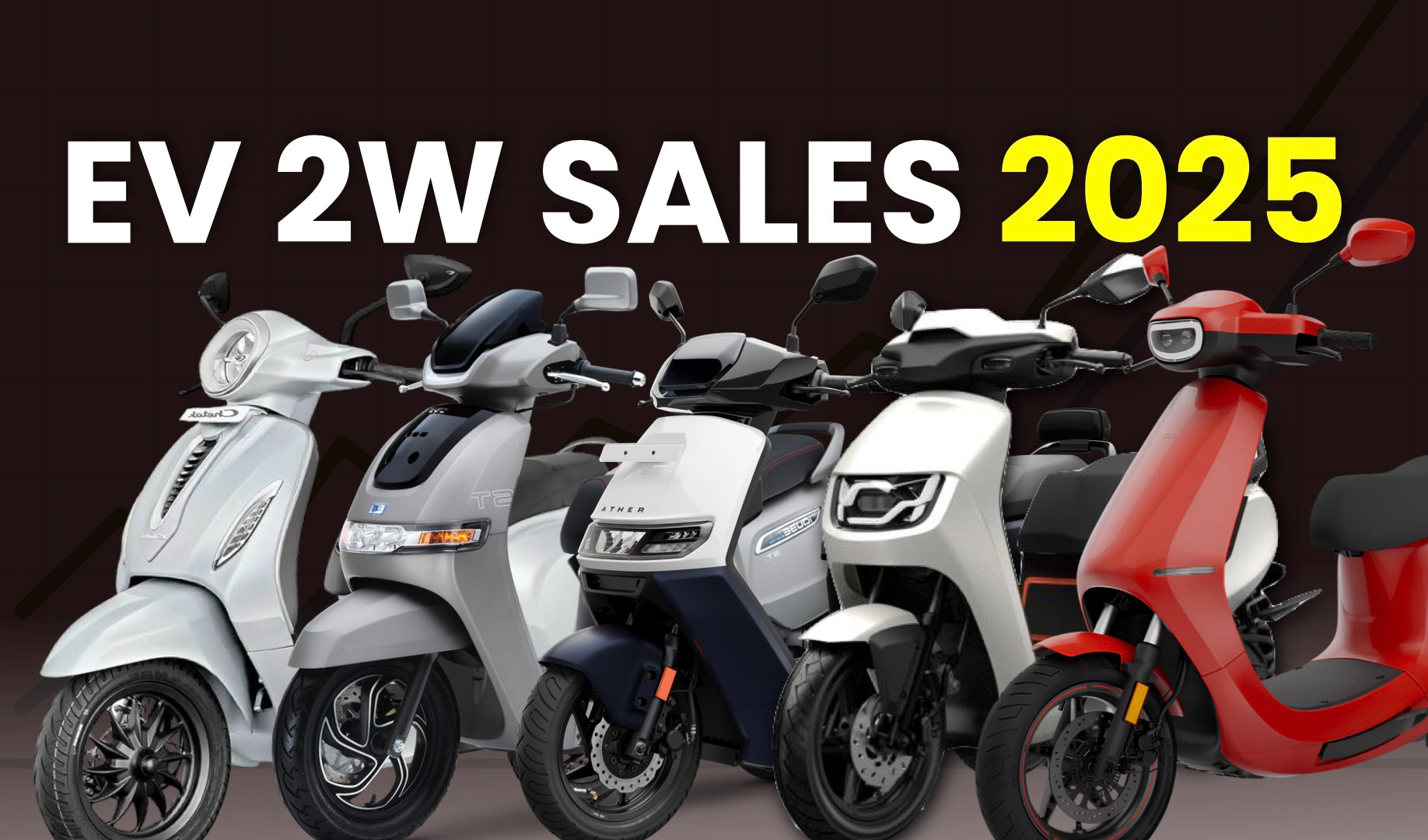
    Electric Two-Wheeler Sales 2025-Tvs Lead Electric 2w Market

    The Indian EV ecosystem witnessed steady momentum in electric two-wheeler sales 2025, driven by increasing fuel costs, government push toward electrification, and rising awareness among urban and semi-urban buyers. Compared to 2024, the market showed healthy expansion with both established automakers and emerging EV startups playing critical roles. Total Electric Two-Wheeler Sales 2024: 1,149,200 units Total Electric Two-Wheeler Sales 2025: 1,279,966 units Year-on-Year Growth: ~11.4% This report provides a complete brand-wise breakdown of electric 2W sales 2025, along with performance trends, growth insights, and market positioning. 1. TVS Motor Company Ltd TVS Motor Company emerged as the largest electric two-wheeler manufacturer in 2025, reinforcing its dominance through strong distribution and reliable products. Sales 2024: 220,829 units Sales 2025: 298,897 units YoY Growth: ~35.3% Market Share 2025: ~23.35% TVS benefited from its extensive service network and customer trust built over decades. The brand’s consistent growth shows that traditional two-wheeler buyers are increasingly comfortable switching to electric models backed by legacy manufacturers. 2. Bajaj Auto Ltd Bajaj Auto delivered one of the strongest performances in electric two-wheeler sales 2025, closing the gap with the market leader. Sales 2024: 193,661 units Sales 2025: 269,837 units YoY Growth: ~39.3% Market Share: ~21.08% Bajaj’s growth highlights rising acceptance of electric mobility among conservative buyers who value brand reliability and long-term ownership confidence. 3. Ather Energy Ltd Ather Energy continued its upward trajectory and strengthened its position in the premium EV segment. Sales 2024: 126,359 units Sales 2025: 200,790 units YoY Growth: ~58.9% Market Share: ~15.69% Ather’s strong focus on performance, connected technology, and charging infrastructure helped it gain loyal customers, especially in metro cities. 4. Ola Electric Technologies Pvt Ltd Ola Electric saw a decline in volumes in electric two wheeler sales 2025, yet remained among the top four players. Sales 2024: 407,701 units Sales 2025: 199,316 units YoY Growth: –51.1% Market Share: ~15.57% Despite the drop, Ola’s presence remains significant. The brand continues to attract first-time EV buyers due to aggressive pricing, wide product range, and strong online reach. 5. Hero MotoCorp Ltd Hero MotoCorp recorded one of the highest growth rates among large manufacturers in electric 2W sales 2025. Sales 2024: 43,712 units Sales 2025: 109,176 units YoY Growth: ~149.7% Market Share: ~8.53% Hero’s growth reflects its aggressive push into electric mobility and the strength of its massive dealership network across rural and urban India. 6. Greaves Electric Mobility Pvt Ltd Greaves Electric Mobility delivered steady and sustainable growth in 2025. Sales 2024: 35,060 units Sales 2025: 56,487 units YoY Growth: ~61.1% Market Share: ~4.41% The company focused on affordable electric scooters, making EV ownership accessible to price-sensitive customers. 7. BGauss Auto Pvt Ltd BGauss Auto continued to expand gradually in the competitive EV landscape. Sales 2024: 18,033 units Sales 2025: 22,883 units YoY Growth: ~26.9% Market Share: ~1.78% BGauss is steadily building brand recognition with practical urban electric scooters. 8. Pur Energy Pvt Ltd Pur Energy emerged as a fast-growing niche player in electric two-wheeler sales 2025. Sales 2024: 5,539 units Sales 2025: 17,847 units YoY Growth: ~222% Market Share: ~1.39% The brand’s sharp growth indicates strong demand in select regional markets and among value-focused buyers. 9. River Mobility Pvt Ltd River Mobility recorded the highest percentage growth among all brands. Sales 2024: 2,515 units Sales 2025: 15,261 units YoY Growth: ~506% Market Share: ~1.19% Although volumes are still small, River Mobility’s growth reflects rising interest in innovative and lifestyle-oriented electric scooters. 10. Kinetic Green Energy & Power Solutions Ltd Kinetic Green maintained a stable position in the EV market. Sales 2024: 11,460 units Sales 2025: 12,611 units YoY Growth: ~10% Market Share: ~0.99% The brand continues to serve budget-conscious customers while gradually improving its product lineup. Electric Two Wheeler Sales Dec 2025: Market Momentum The final month of the year played a crucial role in pushing overall electric two-wheeler sales 2025, supported by festive demand, year-end offers, and improved availability across dealerships. Final Summary The electric 2W sales 2025 data shows a market transitioning from early adoption to maturity. Established brands dominated volumes, while emerging manufacturers delivered impressive growth rates, signaling strong competition and innovation ahead. Final Thoughts With consistent growth in electric two wheeler sales 2025 and strong momentum from electric two wheeler sales Dec 2025, India’s electric mobility future looks increasingly promising. Brands that focus on reliability, service reach, and customer trust will shape the next phase of EV adoption.

    0 187 0

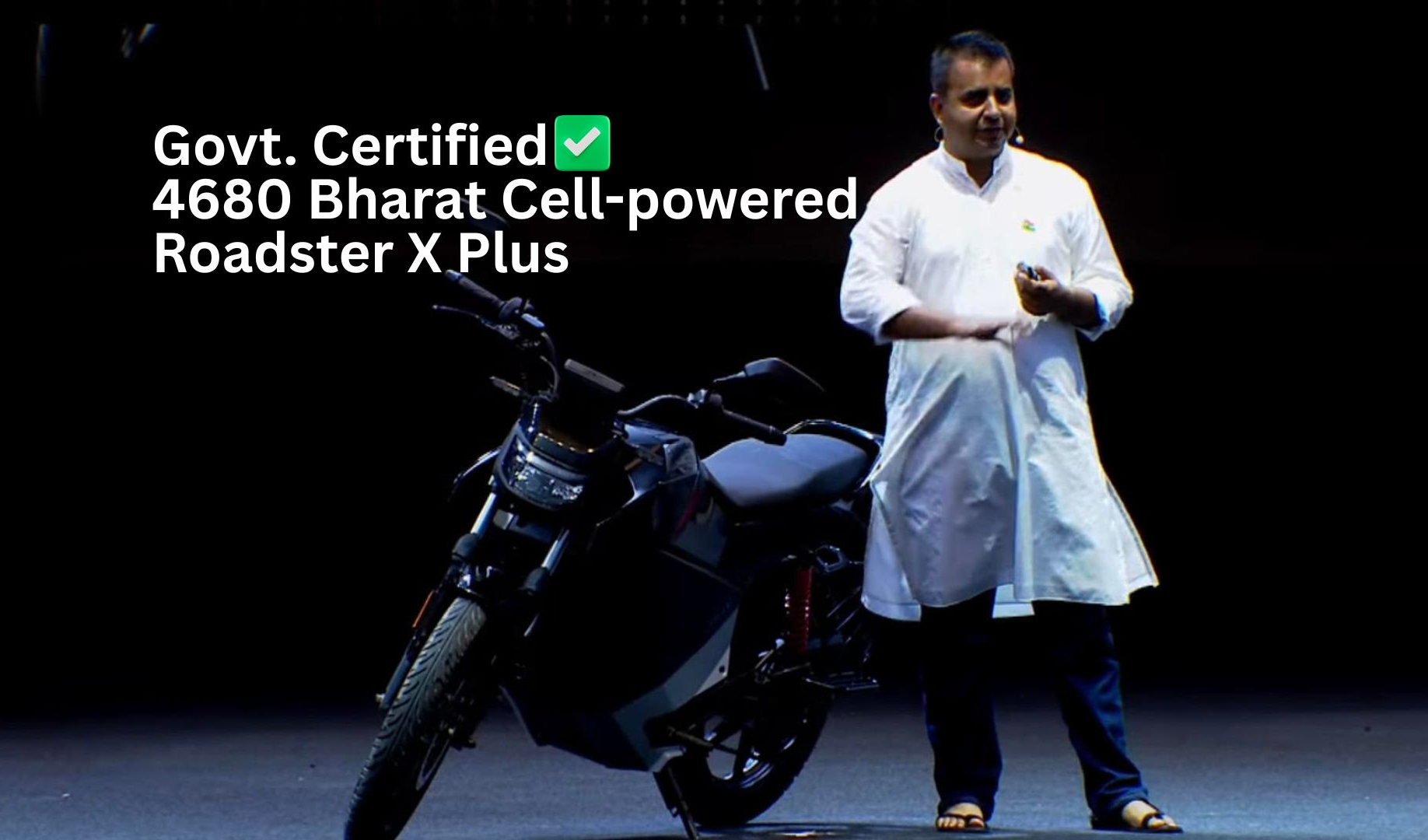
    Ola Electric Gets Government Certification on Ola Roadster X Plus with 4680 Bharat Cell

    India’s electric vehicle industry is evolving at a rapid pace, and Ola Electric continues to play a key role in shaping this transformation. In a recent development, Ola Electric has received important government certification related to its advanced 4680 battery cell technology and the upcoming Ola Roadster X+ electric motorcycle. Along with this, the company has also secured government-backed subsidy and incentive approval, strengthening its position in the Indian EV market. This milestone is not just beneficial for Ola Electric as a brand, but also for the larger vision of Make in India, self-reliance in battery manufacturing, and faster adoption of electric mobility across the country. In this blog, we take a deep dive into what this certification and subsidy approval means, how it impacts Ola Electric’s future, and why it matters for Indian consumers. Ola Electric’s Journey in the Indian EV Market Ola Electric entered the Indian EV space with a clear goal—to make electric mobility accessible, affordable, and future-ready. Starting with electric scooters, the brand quickly gained attention due to its aggressive pricing, long-range offerings, and tech-focused approach. Over time, Ola expanded its vision beyond scooters and announced electric motorcycles, advanced battery research, and large-scale manufacturing infrastructure. The recent government certification is a strong validation of this long-term strategy. Understanding the 4680 Cell Technology Battery technology is the backbone of any electric vehicle, and Ola Electric’s 4680 cell represents a significant step forward. The 4680 cell format is designed to deliver: Higher energy density Improved thermal management Better safety under extreme conditions Longer battery life and durability By working on this cell technology locally, Ola Electric aims to reduce dependency on imported battery cells and strengthen domestic manufacturing capabilities. Government certification confirms that this battery technology meets strict safety, performance, and regulatory standards, making it suitable for real-world usage in Indian conditions. What Government Certification Really Means Government certification is not just a formality. It involves rigorous testing of: Battery safety and stability Vehicle performance and reliability Electrical and thermal management systems Compliance with Indian motor vehicle regulations For Ola Electric, receiving certification for the 4680 cell-based platform means: The technology is legally approved for use in production vehicles Vehicles equipped with this battery can be sold and registered in India Consumer confidence increases significantly This approval also indicates that Ola’s in-house engineering and manufacturing processes are aligning with national regulatory expectations. Ola Roadster X+ and Its Importance The Ola Roadster X+ is positioned as a high-performance electric motorcycle aimed at redefining the electric two-wheeler segment. Unlike traditional electric scooters, electric motorcycles require: Higher power output Better battery efficiency Strong thermal control Enhanced safety systems The Roadster X+ being linked with government-certified battery technology shows that Ola is serious about entering the electric motorcycle space with a robust and future-ready product. With certification in place, Ola can now move closer to mass production and deliveries without regulatory uncertainty. Government Subsidy and Incentive Approval Explained Along with certification, Ola Electric has also received approval for government-linked incentives and subsidies. These incentives are designed to encourage: Local manufacturing Advanced technology development Reduced dependence on imports Faster EV adoption For Ola Electric, subsidy approval means: Financial support for domestic manufacturing Better cost control at scale Improved competitiveness in pricing This also helps the company invest more aggressively in research, infrastructure, and service networks. How This Benefits Ola Electric as a Brand 1. Stronger Brand Credibility Government certification enhances trust. For consumers, it signals that Ola’s technology is tested, approved, and reliable. 2. Cost Efficiency in the Long Term Subsidy support and local battery production can help Ola reduce overall costs, which may positively impact pricing and ownership costs in the future. 3. Faster Product Expansion With regulatory hurdles cleared, Ola can focus on expanding its electric motorcycle lineup and introducing newer models faster. 4. Competitive Advantage Not many EV manufacturers in India are developing advanced battery cells in-house. This gives Ola a technological edge. What This Means for Indian EV Buyers For customers, this development brings multiple benefits: Improved Safety: Certified battery systems reduce risks related to overheating and failure. Better Performance: Advanced cell technology enables longer range and consistent output. Future-Proof Products: Vehicles built on certified platforms are more reliable for long-term ownership. Potential Price Stability: Government incentives can help manage rising input costs. In simple terms, buyers get more confidence and value when choosing Ola Electric products. Impact on India’s EV Ecosystem Ola Electric’s certification and subsidy approval go beyond one company. It sends a strong signal that: India is capable of developing advanced EV battery technology Domestic manufacturing is becoming globally competitive The government is actively supporting innovation-led EV growth This encourages other manufacturers to invest in research, local sourcing, and advanced engineering. Challenges Still Remain While this is a positive step, Ola Electric still faces challenges such as: Scaling service infrastructure efficiently Managing customer experience consistently Maintaining quality at high production volumes However, government certification and subsidy backing provide a stronger foundation to address these challenges systematically. The Road Ahead for Ola Electric With certified battery technology, subsidy support, and ambitious product plans, Ola Electric is clearly positioning itself as a long-term player in India’s EV future. The Roadster X+ could mark the beginning of a new phase where electric motorcycles gain mainstream acceptance. Combined with in-house battery innovation, Ola’s roadmap looks aligned with India’s clean mobility goals. Final Thoughts Ola Electric’s recent government certification for its 4680 cell technology and progress on the Roadster X+, along with subsidy approval, is a major milestone for the brand and the Indian EV industry. It reflects: Technological maturity Regulatory compliance Government confidence in domestic EV manufacturing For consumers, it means safer, more advanced electric vehicles. For the industry, it represents a shift toward self-reliant, innovation-driven growth.   As India moves toward an electric future, developments like these play a crucial role in accelerating adoption and building trust in homegrown EV brands.

    0 112 0

    Top 5 BEST SUVs CARS in 2026 - Best SUV Car Under 15 Lakh

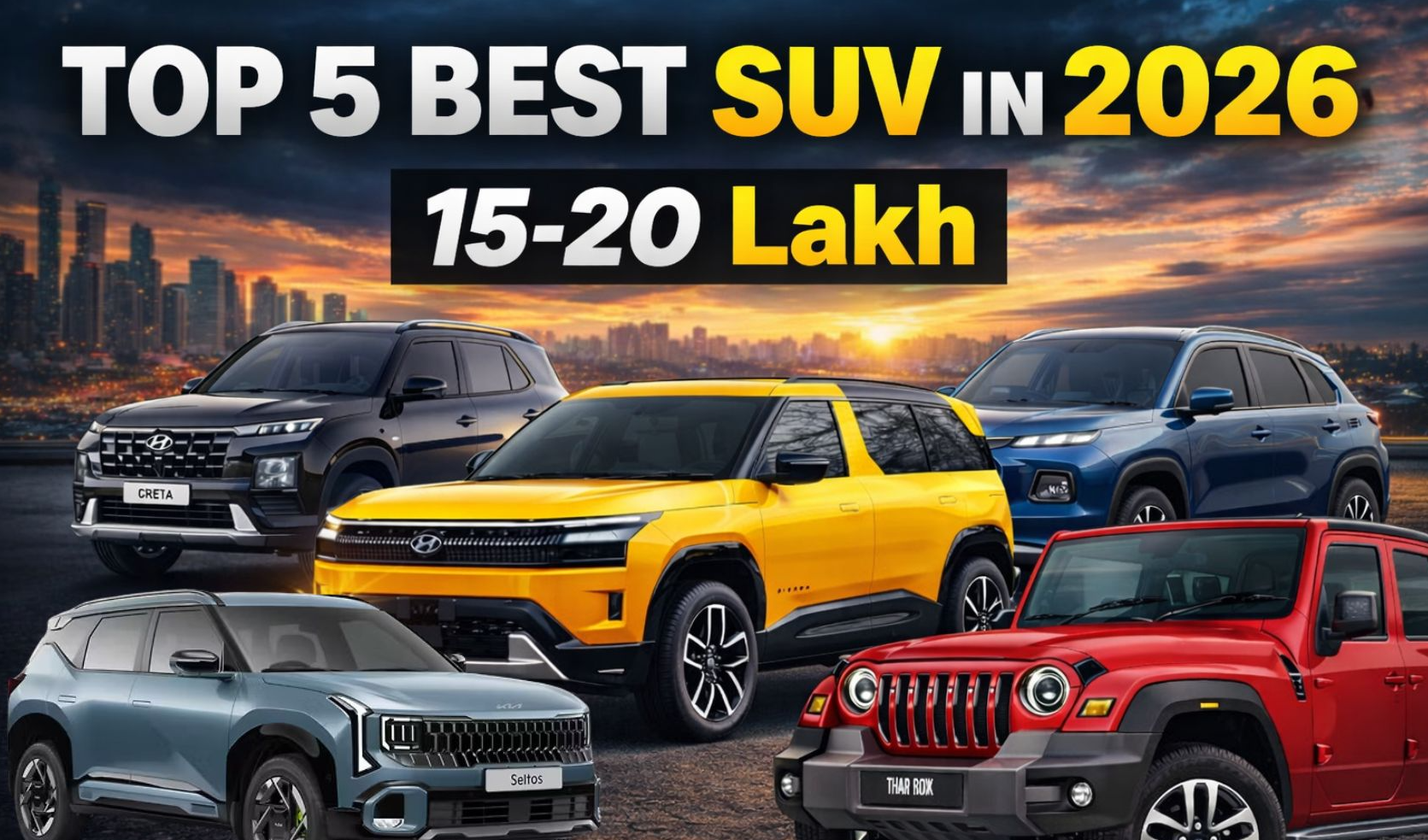
    The Indian automobile market has witnessed a massive shift toward SUVs over the last few years. Buyers today want vehicles that offer road presence, comfort, safety, performance, and modern features, all packed into one. If your budget falls between ₹15 lakh to ₹20 lakh, you are entering a highly competitive segment where some of the most popular and value-packed SUVs are available. This price range offers options for every type of buyer—families, daily commuters, highway tourers, fuel-efficiency seekers, and even hardcore off-road enthusiasts. In this detailed blog, we explore the Top 5 SUVs between ₹15–20 lakh in India, including Tata Sierra, Hyundai Creta, Maruti Grand Vitara, New Kia Seltos, and Mahindra Thar. Along with prices, we’ll also explain why you should buy each SUV and why it may not be the right choice, helping you make an informed decision. 1. Tata Sierra (Upcoming SUV) Expected Price: ₹15 lakh – ₹20 lakh (ex-showroom)Expected Fuel Options: Petrol, Diesel, Electric The Tata Sierra is one of the most anticipated SUVs in India. Originally launched in the 1990s, the Sierra is making a comeback with a completely modern avatar. Tata Motors plans to position it as a premium SUV that blends nostalgia with futuristic design and advanced technology. Why You Should Buy Tata Sierra Iconic Design Revival: The new Sierra is expected to retain the legendary silhouette while adding modern styling elements like LED lighting and bold body lines. Strong Build Quality: Tata is known for solid construction and high safety standards, which is a big advantage. Modern Interiors: A large touchscreen, digital instrument cluster, premium materials, and connected car tech are expected. Multiple Powertrain Options: ICE and electric versions may be offered, making it future-ready. Safety Focus: Likely to come with multiple airbags, ADAS features, and a high safety rating. Why You Might Not Buy Tata Sierra Not Yet Launched: Specifications and real-world performance are still unknown. First-Generation Risks: New models may have minor initial issues. Uncertain Pricing: Fully loaded variants may cross the ₹20 lakh mark. Ideal For: Buyers who want a unique, modern SUV and are willing to wait for a fresh launch. 2. Hyundai Creta Price: ₹15.20 lakh – ₹19.90 lakh (ex-showroom)Fuel Options: Petrol, Diesel The Hyundai Creta continues to dominate the mid-size SUV segment. Known for its comfort, refined engines, and feature-rich cabin, Creta remains a safe and reliable choice for Indian families. Why You Should Buy Hyundai Creta Excellent Ride Comfort: Perfect for city driving as well as long highway journeys. Premium Cabin Experience: Dual screens, ventilated seats, panoramic features, and modern infotainment. Engine Choices: Smooth petrol engines and torquey diesel options. Low Ownership Stress: Hyundai’s wide service network and reliability. Strong Resale Value: One of the best in its segment. Why You Might Not Buy Hyundai Creta Average Build Feel: Not as solid as some rivals. Not Driver-Focused: Performance enthusiasts may find it less engaging. Safety Perception: Though improved, some buyers expect more. Ideal For: Families looking for a comfortable, hassle-free, and feature-loaded SUV. 3. Maruti Grand Vitara Price: ₹15 lakh – ₹19.95 lakh (ex-showroom)Fuel Options: Petrol, Strong Hybrid The Maruti Grand Vitara stands out due to its excellent fuel efficiency and hybrid technology. It is designed for buyers who want practicality, low running costs, and peace of mind. Why You Should Buy Maruti Grand Vitara Outstanding Mileage: Hybrid variants deliver exceptional fuel efficiency. Low Maintenance Costs: One of the most affordable SUVs to own long-term. Smooth Driving Experience: Perfect for city traffic and relaxed highway drives. Trusted Service Network: Maruti’s reach is unmatched. Comfort-Oriented Setup: Easy to drive and live with daily. Why You Might Not Buy Maruti Grand Vitara Interior Feels Basic: Not as premium as competitors. Performance Is Moderate: Not meant for spirited driving. Limited Off-Road Capability: More of a soft-roader. Ideal For: Buyers focused on fuel savings, reliability, and long-term ownership. 4. New Kia Seltos Price: ₹15.50 lakh – ₹20 lakh (ex-showroom)Fuel Options: Petrol, Diesel The New Kia Seltos has evolved into a feature-rich and stylish SUV. It appeals strongly to young buyers and tech-savvy users who want modern design and performance. Why You Should Buy New Kia Seltos Bold and Sporty Design: One of the most stylish SUVs in this segment. Premium Features: Large infotainment screen, ADAS, digital cockpit, and connected tech. Powerful Engines: Turbo petrol and diesel options offer strong performance. Balanced Handling: Comfortable yet fun to drive. Brand Image: Kia has built a strong reputation quickly. Why You Might Not Buy New Kia Seltos Rear Seat Comfort: Slightly compromised for taller passengers. Service Costs: Higher than Maruti and Hyundai. Safety Concerns (Past Models): Though improved, some buyers remain cautious. Ideal For: Buyers who want a modern, performance-oriented, and stylish SUV. 5. Mahindra Thar Price: ₹15.50 lakh – ₹19.80 lakh (ex-showroom)Fuel Options: Petrol, DieselDrivetrain: 4x4 The Mahindra Thar is a lifestyle SUV designed for adventure lovers. It offers true off-road capability that no other SUV in this segment can match. Why You Should Buy Mahindra Thar True Off-Road Capability: 4x4 system with low-range gearbox. Powerful Engines: Strong torque and performance. Rugged Build Quality: Built to handle rough terrains. Unique Road Presence: Instantly recognizable. Improved Safety: Better safety features in newer versions. Why You Might Not Buy Mahindra Thar Limited Practicality: Small boot and rear seat space. Not Family-Friendly: Best as a second car. Firm Ride Quality: Not ideal for long highway cruising. Ideal For: Adventure enthusiasts and buyers who want a fun, rugged SUV. Final Verdict: Which SUV Is Right for You? Each SUV in the ₹15–20 lakh price bracket serves a different purpose: Tata Sierra: Future-focused buyers who want something unique Hyundai Creta: Comfort and reliability seekers Maruti Grand Vitara: Mileage-conscious and practical users Kia Seltos: Style, performance, and tech lovers Mahindra Thar: Off-road and adventure enthusiasts   Before making a decision, consider your daily usage, family needs, fuel preference, and long-term ownership costs. Test drives are highly recommended to understand comfort and driving feel.
    0 253 0